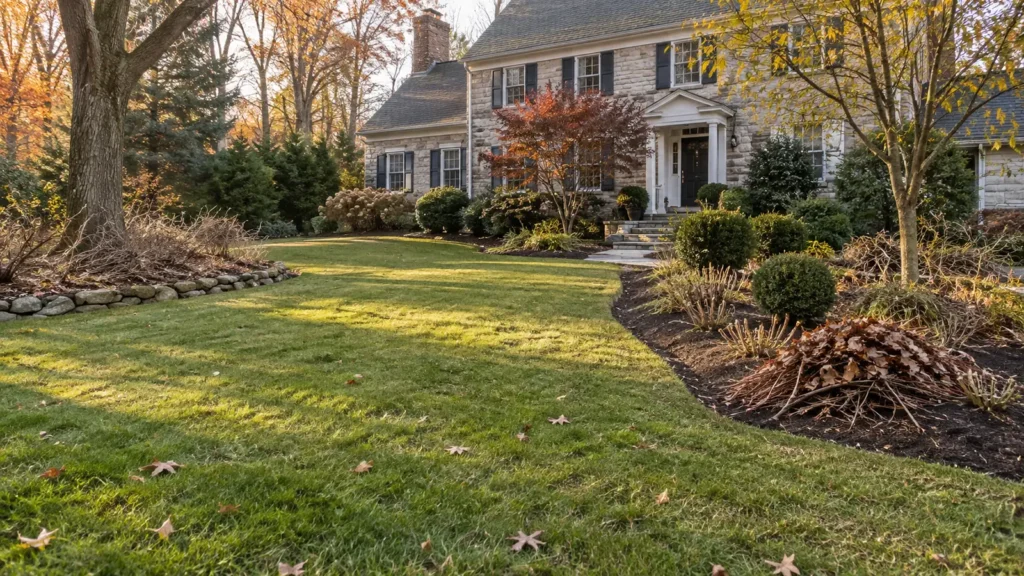
Fall posters and spring checklists throw around “cleanup” like it’s one job. On a real Montgomery County property, it isn’t. Leaf cleanup targets a seasonal problem. Property cleanup is broader—storm debris, overgrown edges, neglected corners, and the reset that makes the yard usable again.
Choosing the wrong one usually means either paying for work you didn’t need or staring at a tidy lawn that still has a brush pile behind the shed.
Leaf cleanup: focused on seasonal drop
Leaf cleanup is about getting fallen leaves off turf, beds, walks, and often the driveway or patio so grass isn’t smothered and hard surfaces stay safe.
A typical leaf-focused visit may include:
- Raking, blowing, or vacuuming leaves from lawn areas
- Clearing leaves from planting beds and along foundations
- Moving leaves off walks, steps, and driveways
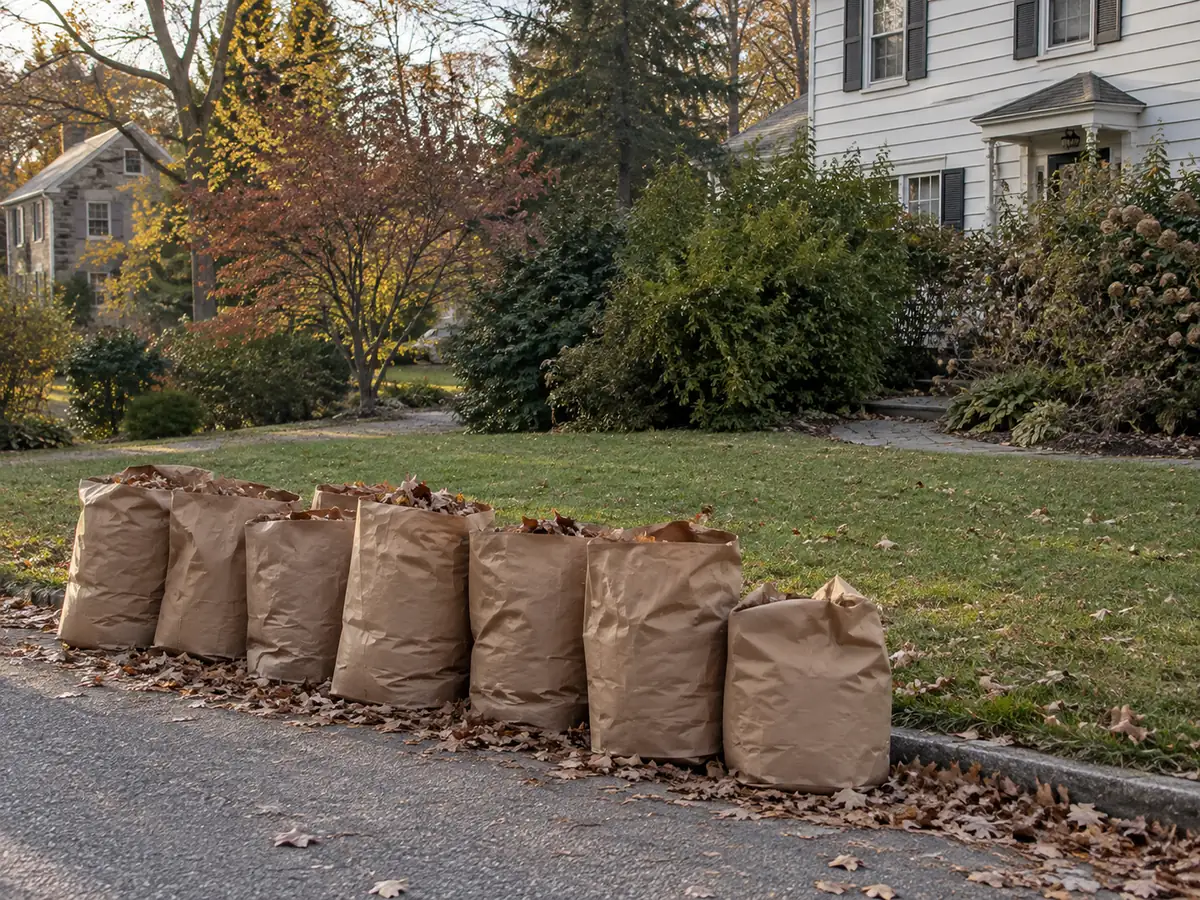
- Hauling or bagging leaves per your disposal plan
- Sometimes a light pass to keep gutters’ immediate splash areas clearer of piled leaves on the ground (roof gutter cleaning itself is a different trade)
Leaf service is most useful when trees are dropping in waves. One early October visit rarely finishes the season on a lot with mature maples or oaks. Many homeowners schedule a mid-drop visit and a final pass when the canopy is mostly bare—or they book ongoing leaf service through the heavy weeks.
Leaf cleanup is not automatically a full shrub prune, bed rebuild, or junk haul. If the only problem is leaves, don’t overbuy a whole-property reset.
Property cleanup: the wider reset
Property cleanup answers a different question: “What needs to leave this yard so maintenance can work again?”
That can show up after a storm, a move-in, a season of neglect, or a renovation when contractors left piles behind. Scope varies by site, but often includes some mix of:
- Removing brush, fallen limbs, and accumulated yard debris
- Clearing overgrown weed patches or volunteer saplings in awkward spots
- Pulling trash, scattered materials, or leftover project debris (within reason and as agreed)
- Cutting back heavy overgrowth that blocks fences, gates, or AC units
- General hauling of green waste and agreed debris
- Leaving turf and beds in a state where regular mowing or mulching can resume
Property cleanup can happen any time of year. Spring “get ahead of the weeds” visits and post-storm visits are common. It may include leaf removal if leaves are part of the mess—but leaves aren’t the whole point.
Side-by-side: how to tell which you need
Ask yourself what would still bother you if every leaf disappeared tomorrow.
Lean toward leaf cleanup if:
- Turf is getting buried under a seasonal carpet of leaves
- Beds look fine structurally; they’re just leaf-covered
- Walks and lawn are the main concern
- Shrubs are roughly the shape you want
- You’re otherwise on a normal maintenance rhythm
Lean toward property cleanup if:
- There’s brush, limb piles, or overgrown edges that mowing won’t fix
- A corner of the lot has gone feral (vines, tall weeds, volunteer trees)
- You’re preparing for a sale, move-in, or the start of lawn service
- Storm damage left debris beyond a blower’s job
- You need a broad “make this maintainable again” visit
You may need both (or a combined scope) if:
- Fall leaves are heavy and beds/edges have been ignored for a year
- You’re doing a late-fall reset before winter: leaves out, debris gone, beds edged
- A spring cleanup includes leftover fall leaves plus winter blowdown
When in doubt, describe the property in photos and plain language. A good estimate should name leaf work and debris/overgrowth work separately so you can prioritize.
Timing notes for southeastern PA yards
Leaves don’t fall on one weekend. Oaks hang on later than some maples. A single “leaf cleanup” appointment in early fall can look great for a week and then disappear under the next drop. Plan for the pattern of your trees, not a generic date.
Property cleanups often pair well with:
- Start of lawn service in spring
- Pre-mulch bed work
- After major storms
- Before listing a home, when curb-to-fence presentation matters
Weather matters for both. Wet, packed leaves are heavier and smear into turf. Frozen ground or ice can pause safe cleanup. Flexible scheduling beats forcing a visit on a bad day.
What to put in writing either way
Whether you book leaves, a full cleanup, or a blend, lock down:
- Areas included — front only vs. entire lot, including behind sheds and along rear fences.
- Disposal — hauled by the crew, left bagged for township pickup, or placed in your containers.
- What stays — firewood piles you want kept, play equipment, pots, and staging areas.
- Beds and edges — leaves only, or weeds and edge redefine too?
- Shrubs — hands off, light clearance only, or separate prune visit?
- Access — private gate-access details after scheduling, dog plans, HOA rules about street piles.
Clarity here prevents the classic “they cleaned the front and left the side yard” surprise.
Choosing the Right Cleanup
Worthy Landscaping offers property cleanup when the yard needs a broader reset, and focused leaf cleanup and removal in Montgomery County, PA when seasonal drop is the main issue. We serve Montgomery, Delaware, and Chester Counties and the Main Line / western Philadelphia suburbs.
Not sure which visit fits? Send a few photos and a short note through contact us, email contactus@worthylandscaping.com, or call (215) 490-8474. Worthy Landscaping is based in Bridgeport, PA—we’ll help you scope the job you actually need, not a package name that sounds close enough.