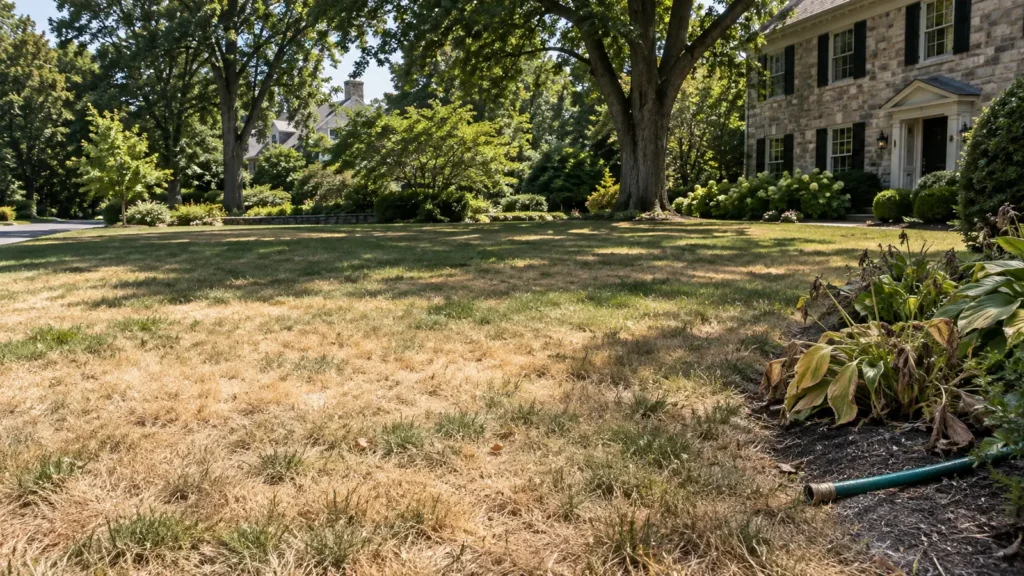
Main Line lawns often live in tight spaces. Mature trees cast long shade. Driveways and walkways bounce heat onto narrow turf strips. When July and August stack hot days, stress shows up fast—and it does not always mean the grass is “dead.”
Worthy Landscaping’s lawn care work across the Main Line and western Philadelphia suburbs focuses on reading those patterns early. Here is what to watch and what usually helps before you assume the worst.
Heat stress vs. dormancy vs. damage
Cool-season grasses common here can go semi-dormant in prolonged heat and drought. The lawn looks dull or brownish but crowns can still be alive. Damage looks different: thin patches that do not bounce after cooler nights and rain, or areas worn to bare soil by traffic.
A simple check: tug a few blades in a suspect spot. If crowns feel anchored and you see pale green at the base after rain, patience and lighter traffic may be enough. If soil is bare and roots are gone, you are looking at repair, not just waiting.
Shade: the quiet Main Line challenge
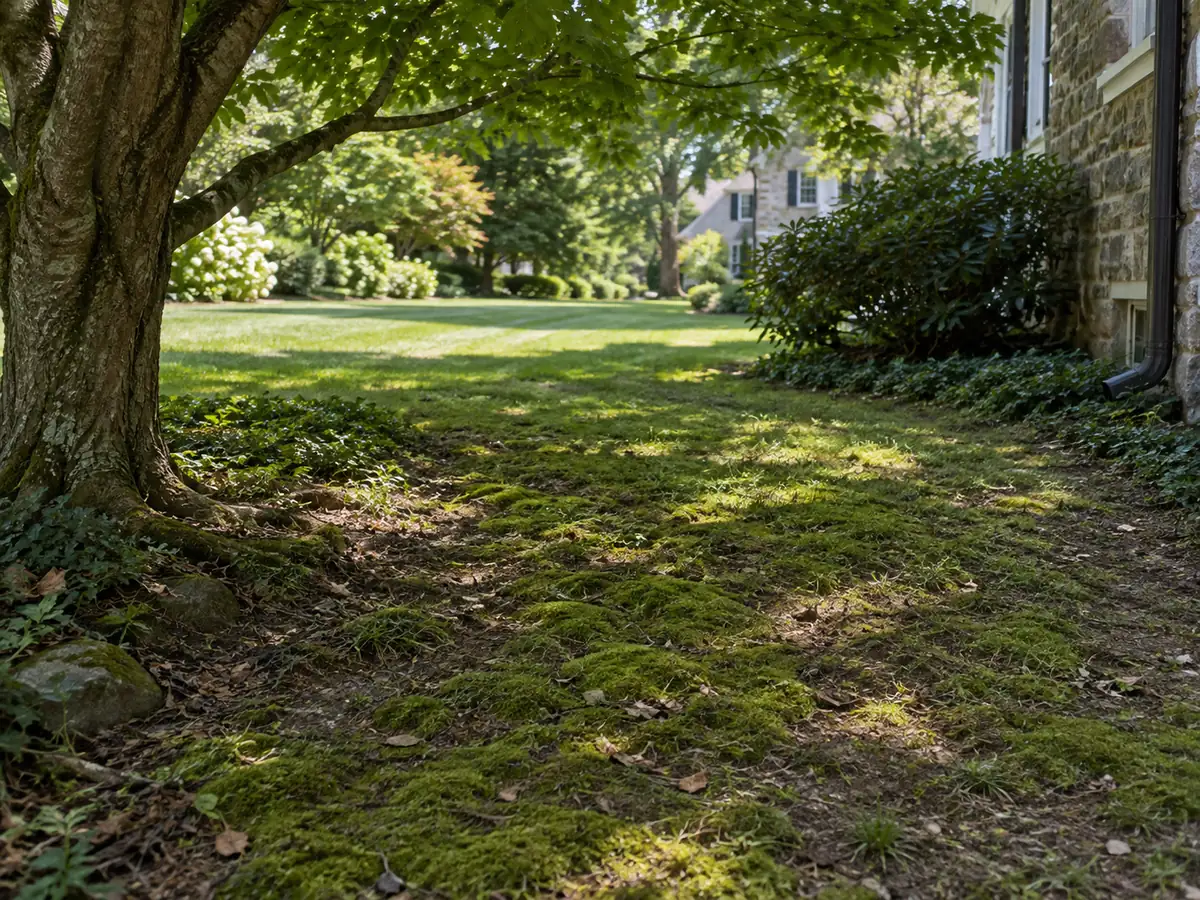
Large oaks, maples, and street trees are part of why these neighborhoods look settled. They also limit light. Grass that thrived in spring can thin by midsummer when the canopy fills in. Thin shade lawns invite moss and weeds that tolerate low light better than turf.
Watch for:
- Areas that green in spring then fade as leaves mature
- Moss on the north side of the house or under dense trees
- Bare soil under low limbs where nothing gets enough sun
Raising canopy (where appropriate and allowed) and choosing expectations for deep shade matter more than pouring more fertilizer on a sun-starved strip. Some spots are better as groundcover or mulch beds than as forced turf.
Compact lots and compaction
Small lots mean every trip to the shed, trash cans, and side gate hits the same grass. Combined with clay-heavy soils common in parts of SE PA, summer traffic packs the surface. Water runs off instead of soaking in. Roots stay shallow. Heat then hits harder.
Signs of compaction:
- Water puddles or sheets off after a short storm
- Hard surface underfoot even when moisture should be present
- Thin turf along preferred walking lines
Lawn aeration is a tool for timing later in the season for cool-season turf—not a mid-heat emergency fix. Midsummer, reduce traffic on stressed strips and water deeply when you water, rather than daily light sprinkles that encourage shallow roots.
Watering and mowing under stress
If you irrigate, water less often and more deeply when allowed and when the lawn is actively using water. Early morning is usually better than evening in humid stretches. If you do not irrigate, accept some dormancy rather than constant shallow watering that barely helps.
Mowing high reduces stress. Scalping a heat-stressed lawn to “even it out” removes leaf area the plant needs. Keep blades sharp; torn tips brown faster in sun.
Leave clippings when they are light and dry. Heavy wet clumps should be broken up or removed so they do not mat.
Compact-lot watch list
Use this midsummer walk-through:
- Sun map — note full sun, part sun, and deep shade after the canopy fills.
- Traffic lanes — where feet and carts always go.
- Hot edges — turf against asphalt, stone, or south-facing walls.
- Wet corners — poor drainage that stays soft then hardens into weak turf.
- Thin vs. bare — decide which areas need patience, cultural change, or sod discussion later when temperatures ease.
Photos in late afternoon light show shade patterns better than noon shots.
What not to do in peak heat
Avoid heavy renovation, aggressive dethatching, or big sod installs in the peak of a heat wave unless there is a specific reason and a plan for water and care. Avoid parking cars or staging materials on already thin turf. Avoid assuming every brown patch needs the same product—heat, insects, fungus, and dog spots can look similar from the porch.
When something spreads quickly or looks unusual, a site look beats guessing from a phone photo alone.
Get Help With a Stressed Lawn
If your Main Line lawn is thinning in shade, baking along the driveway, or wearing out in the same traffic lane every year, contact Worthy Landscaping. Share a few photos and note sun, shade, and how you water. We will talk through practical next steps—care adjustments now, and aeration or repair timing when the season supports it.