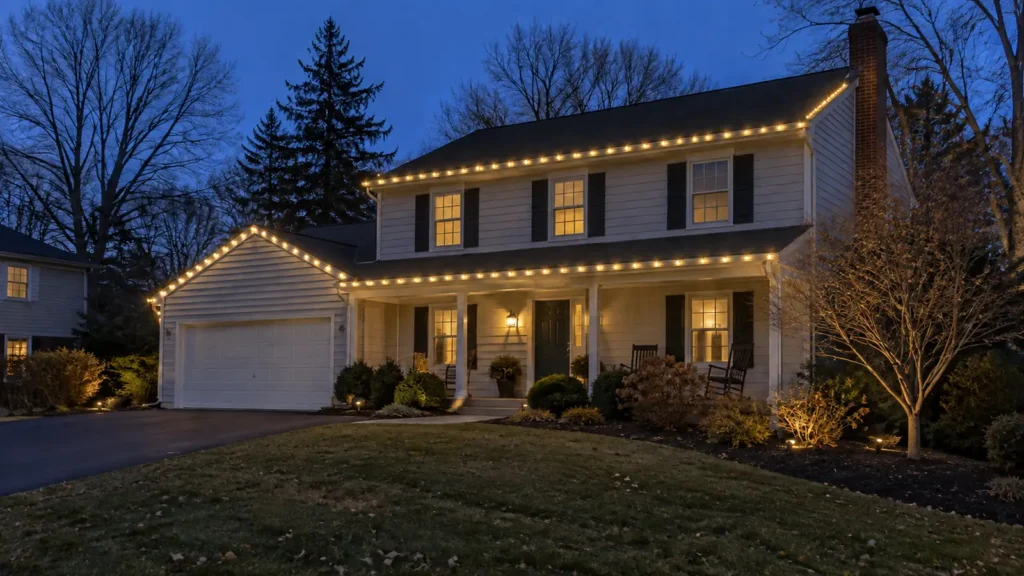
Buying more lights is the easy part. The decisions that make a display calm to live with—and easier to take down—are routes, power, timers, and a clear end date. Sorting those before install day prevents mid-ladder changes and extension-cord puzzles after dark.
Worthy Landscaping’s Christmas light installation services work best when homeowners already know what matters most on their house. You do not need a catalog of packages. You need a short list of choices. Families on the Main Line and across Montco often share the same constraint: limited daylight after work and a house that has to stay usable while the display goes up.
Decide the story of the house at night
Pick a focus. Most homes look better with a strong outline and a few accents than with every shrub competing for attention.
Common focuses:
- Roofline and main façade facing the street
- Entry and walk lighting for guests
- A single tree or pair of trees as anchors
- Soft bed lighting that supports, not overwhelms, the architecture
Walk across the street at dusk before you decide. What you notice from the curb is what neighbors and visitors will notice. Interior window glow and porch fixtures already light some of the story—holiday lights should add, not fight, that existing light.
If your house has a strong architectural line—a gable, a porch roof, a clean eave—lean into that. If the charm is in the trees, let the trees carry more of the load and keep the roofline simpler. Trying to maximize every surface often flattens the result.
Map routes and access before cords exist
Think about how installers (or you) will move around the house.
- Which sides have safe ladder footing?
- Are flower beds soft or freshly mulched where feet will land?
- Is there a locked side gate that blocks the only path to the backyard tree you care about?
- Where will spare reels, clips, and ladders stage without blocking the driveway you still need?
- Do kids or pets use a side yard that should stay open during install?
Write down must-include and nice-to-have zones. If time or complexity grows, the must-include list keeps the project coherent. Backyard-only displays can be lovely for the people who live there; say so if the street view is secondary this year.
Power and timers: quiet decisions with big impact
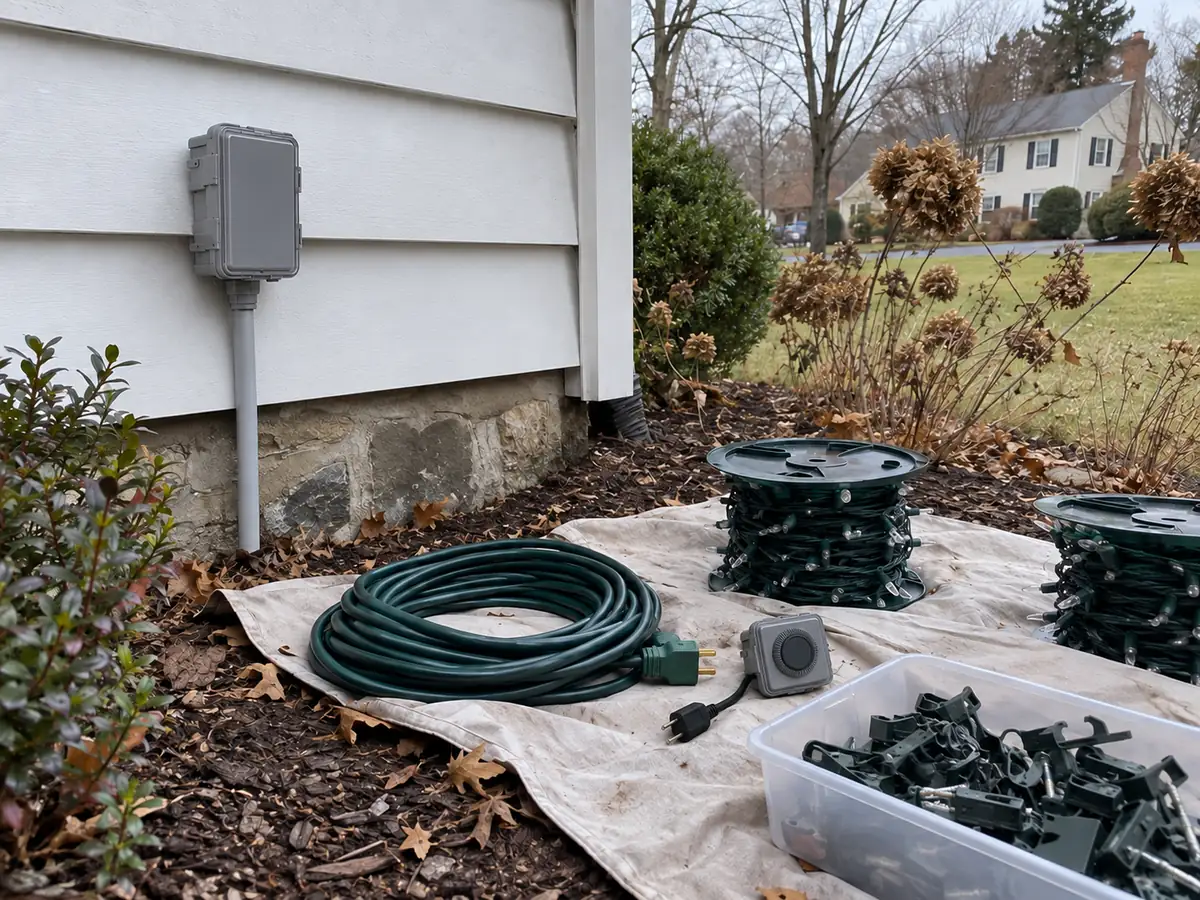
Count usable exterior outlets and note which are GFCI-protected. Avoid daisy-chaining long runs in ways that trip breakers every cold night. Timers beat relying on memory; photocells and programmable timers both work when matched to how you want the display to behave on weeknights versus weekends.
Decide:
- On/off window — e.g., dusk to a set evening hour
- Who adjusts after storms or clock changes
- What stays dark — bedrooms that face bright trees, or a side yard you do not want lit
- Storm plan — who checks after high wind if a strand fails
Electrical repairs or new outlets should be planned separately from the lighting installation. If outlets are missing, overloaded, or unsafe, that is a separate conversation with a qualified electrician before lights go up. A clean power plan is part of a calm season.
Weather, roofs, and honesty about height
Southeastern Pennsylvania winters bring wind, ice, and wet leaves on roofs. Peak and multi-story work needs clear weather windows and realistic scope. If a section of roof is steep, brittle, or recently worked on, it may be wiser to emphasize eaves you can reach safely and trees you can dress from the ground with proper equipment.
Say so early if certain peaks are off-limits. A strong plan on reachable surfaces beats a thin plan stretched into risky spots. Ice dams and fragile shingles are reasons to simplify, not to push harder.
Color, brightness, and neighbors
Taste is personal. Still, a few practical notes help. Warm white often reads calmer on traditional homes; mixed colors can be fun if the house scale supports them. Extremely bright floods aimed at the street may bother neighbors more than they help your entry. If you share a tight lot line, consider how the display looks from their windows—not only from yours.
You do not need a committee. You do need one decision-maker in the household so install day is not a debate on the lawn.
Takedown is part of the install decision
The nicest January gift to yourself is a defined takedown plan. Decide roughly when lights should come down and where stored reels will live. Leaving hardware up “one more weekend” often becomes March, which is hard on materials and on how the house looks in late winter light.
Ask yourself:
- Do you want installation and takedown handled together as a seasonal pair?
- Where will materials store dry between seasons?
- Who notices a strand that fails mid-season, and how should that be reported?
- Is there a post-holiday date that already works for your calendar (early January, after a trip, before school resumes)?
Putting takedown on the calendar when you book install keeps the whole season tidy. It also pairs naturally with other seasonal services if you are already planning a winter or early-spring reset.
Decision checklist to send with a request
- Focus areas (roofline, entry, trees, beds)
- Must-include vs. optional zones
- Outlet locations and timer preference
- Access notes (gates, dogs, parking)
- Any no-go roof or ladder areas
- Preferred install window and takedown window
- Whether bed prep or mulch should happen first
- Color or brightness preferences, if you have them
Photos of the front elevation and outlet locations help more than a long description alone.
Plan a Cleaner Holiday Lighting Installation
When you know the focus, power picture, and takedown timing, contact Worthy Landscaping to talk through residential holiday lighting. Share a few photos and your must-include list. We serve homes from our Bridgeport base across Montco, Delco, Chester County, and the Main Line, and we will help turn those decisions into a clean install plan.