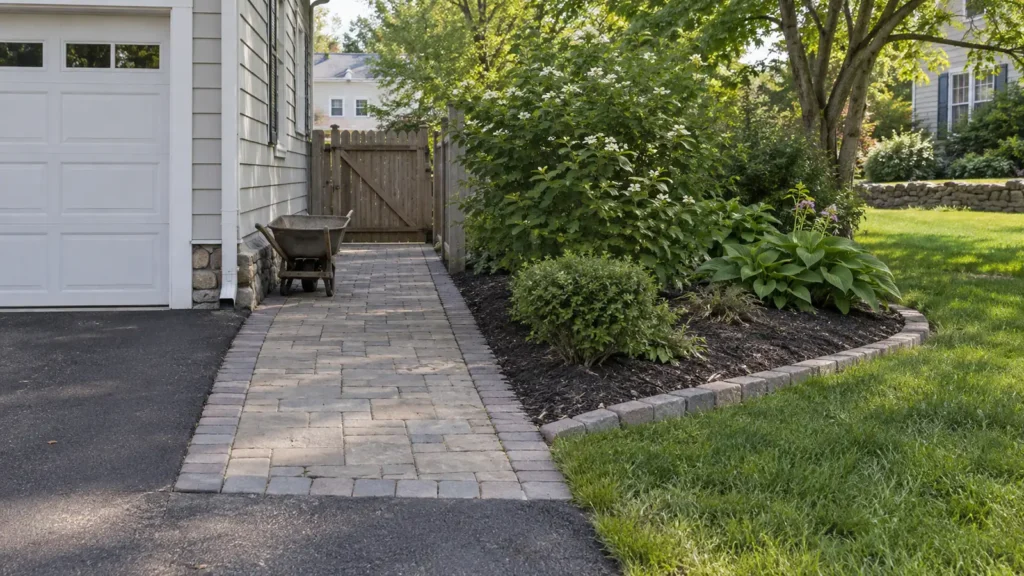
A patio looks great in a photo. A walkway edged in stone looks finished. Neither matters much if the first rain puddles where you step out of the car, or if the mower still cannot reach the fence line. Hardscaping works best when it solves how you move through and care for the property—not when it is chosen as a catalog piece.
At Worthy Landscaping, we start with use. Paths, borders, drainage, and access come before color charts. That order saves rework and keeps the yard easier to maintain year after year across Montgomery, Delaware, and Chester Counties and the Main Line.
Start with how people and equipment move
Walk the property the way you actually live on it for a week. Note where feet go when groceries come in, where kids cut across the lawn, and where the trash cans roll. Mark spots that stay soft after rain. Those soft spots are often where a short path or a small landing does more good than a large patio you rarely sit on.
Think about equipment too. Mowers need room to turn. Wheelbarrows and leaf blowers need a clear route from the driveway to the back fence. If a planned border blocks that route, you will fight it every season. Good hardscaping leaves a working lane even when the yard looks “done.”
Borders that protect lawn and beds
Edging is not only for looks. A clean border between turf and planting beds keeps mulch from washing into the grass and keeps the string trimmer from chewing the same soft soil every week. Stone, brick, or concrete edging can hold a line through freeze-thaw cycles common in southeastern Pennsylvania.
Decide the height and depth based on what the border must hold back. A low mow strip along a driveway catches grit. A deeper edge along a raised bed holds soil during heavy summer storms. Match the border to the job, then choose the finish that fits the house.
Drainage and water movement before decorative stone
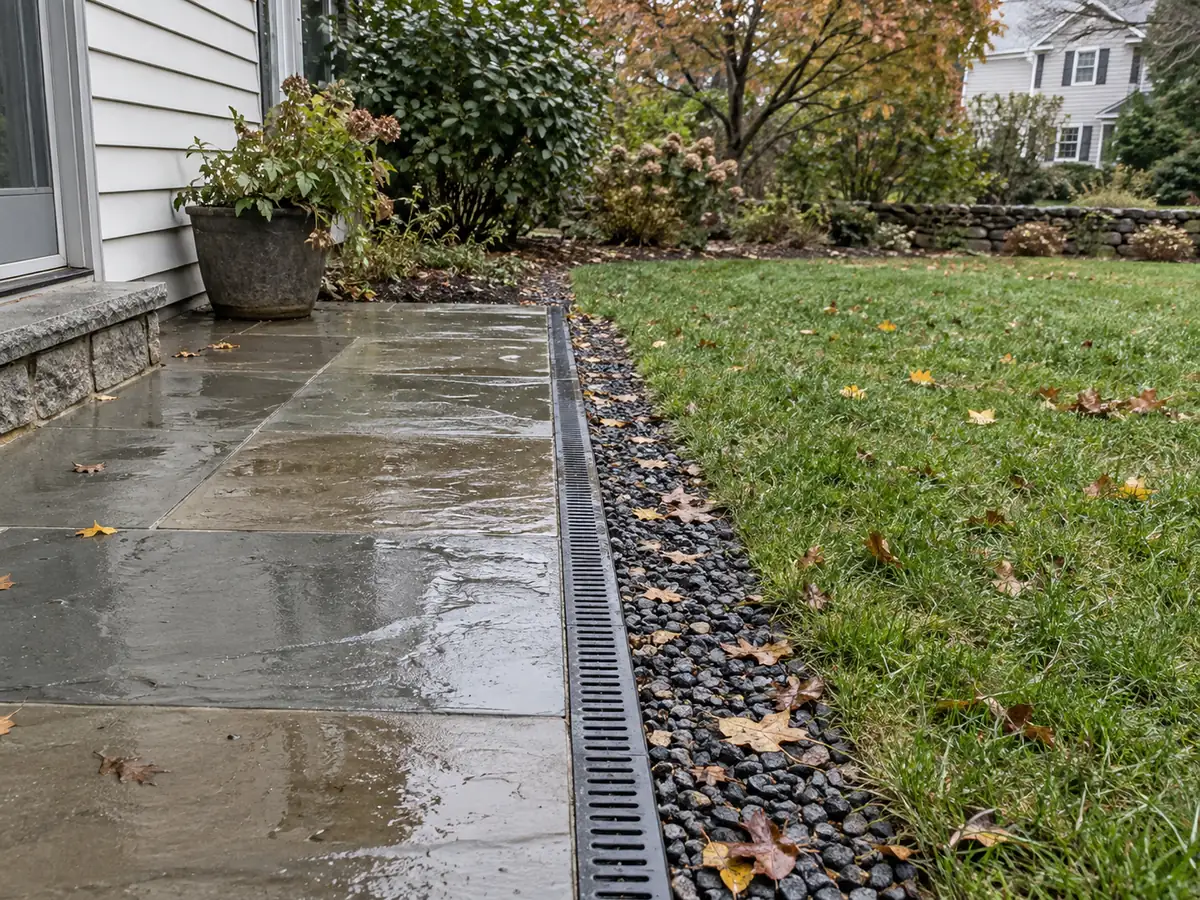
Water always finds a path. If your downspouts dump onto a flat pad, or if the grade tilts toward the foundation, hard surfaces can make pooling worse. Before installing a patio or walk, look at where water goes after a hard rain. Sometimes a slight pitch, a small channel, or a permeable section near a low spot solves more than another load of pavers.
You do not need a full engineering study for every residential project. You do need honesty about standing water. If a corner floods after every storm, that corner is a drainage problem first and a seating area second. Fix the flow, then decide what hard surface belongs there.
Access for daily life and seasonal work
Gates, side yards, and the strip between house and fence often get ignored until someone tries to haul sod or holiday light boxes through. Hardscaping can widen a pinch point, add a durable step where a muddy slope used to be, or create a short pad for trash and recycling bins so they are not parked on the lawn.
Ask yourself:
- Can a crew reach the back with a cart without tearing up turf?
- Is the hose bib still easy to use after the patio goes in?
- Will snow get shoved onto the only walk you care about?
Those questions sound boring. They keep a project practical.
A simple planning checklist
Use this before you call for an estimate:
- List daily routes — house to driveway, driveway to side gate, kitchen door to grill.
- Mark wet spots — after a rain, note puddles and soft ground.
- Note maintenance choke points — places the mower skips or the trimmer struggles.
- Rank use, not wish lists — seating, play, storage, or quiet planting; pick the top two.
- Check sight lines — from the street and from main windows so new edges look intentional.
- Confirm any township rules for your address if structures, walls, or drainage changes may need review.
Photos of problem areas help more than mood boards. A clear shot of a muddy side yard after rain tells us more than a Pinterest patio.
What we talk through on a walkthrough
When we visit for hardscaping, we talk about traffic, grade, and how the rest of the landscape will be cared for. We look at how lawn, beds, and hard surfaces will meet so mowing and mulching stay simple. We do not push a single material as the answer. Material choice follows the job: durable under foot traffic, stable at edges, and workable with local freeze-thaw.
If your priorities are still fuzzy, that is fine. Many homeowners know the problem—“the walk is always muddy” or “the bed keeps collapsing into the grass”—before they know the fix. Naming the problem is enough to start.
Plan Hardscaping Around Your Property
If you want hardscaping that matches how your property is used—not just how it photographs—contact Worthy Landscaping. Share a few photos and a short note about the routes and wet spots that bother you. We serve Bridgeport and surrounding communities in Montco, Delco, Chester County, and the Main Line, and we will walk the site with use in mind first.