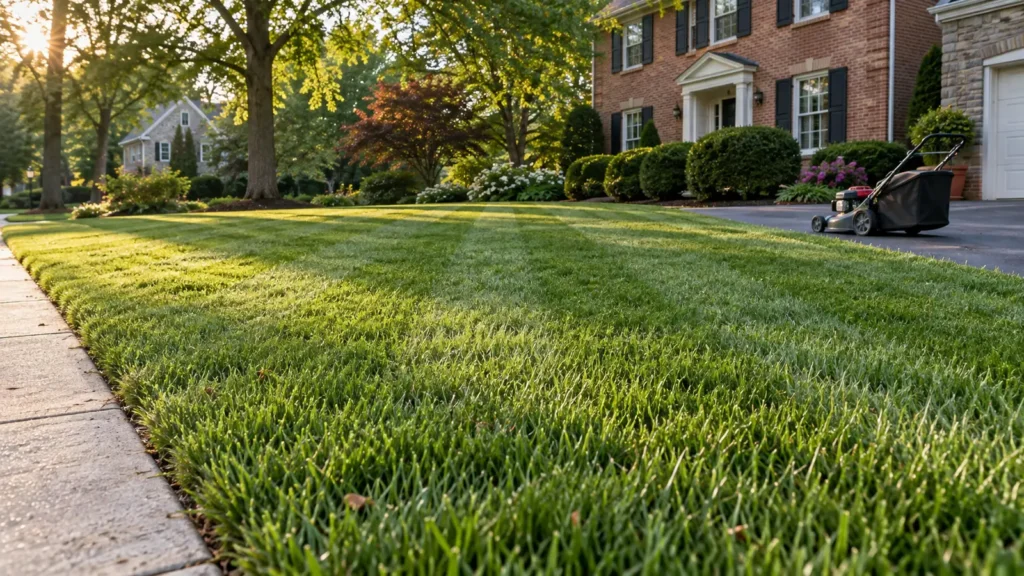
Neighbors on the same street can mow on different schedules and both be right. In Montgomery County, the better question isn’t “Is weekly the rule?” It’s “Is the grass growing fast enough that waiting another few days will leave a ragged cut?”
Here’s a plain-language rhythm for cool-season lawns in our area—without pretending every spring or every yard behaves the same.
The local growing pattern in plain terms
Southeastern Pennsylvania lawns (fescue mixes and similar cool-season turf are common) typically push hard in spring, ease off in the hotter stretch of summer when rainfall is short, then put on another growth push in fall before dormancy. Compact clay soils and shade from mature trees—both common on Main Line and Montco lots—can slow that rhythm in spots even when open sun patches are racing.
So frequency follows growth, not the calendar alone. A fixed “every seven days no matter what” plan works in peak weeks. In slower weeks, it can scalp thin turf or waste a visit. In surge weeks after rain, seven days may already be late.
Peak spring: when weekly (or nearly weekly) earns its keep
Once soil warms and nights stop swinging so hard, grass often needs a regular cut. Weekly mowing through the strong spring push keeps you from removing too much leaf at once. Cutting more than about a third of the blade in one pass stresses the plant and leaves a yellow cast on the tips.
Practical signs you’re in peak mode:
- You can see growth between Monday and Friday on the same patch.
- Seed heads start popping if you stretch the interval.
- Edges along walks fuzz over quickly after a clean edge.
If a wet week cancels a visit, don’t “catch up” by dropping the deck and shearing tall grass in one go. Raise the height, take a first pass, then return sooner for a second cut if needed. That two-step approach looks better and treats the lawn kinder than one aggressive scalp.
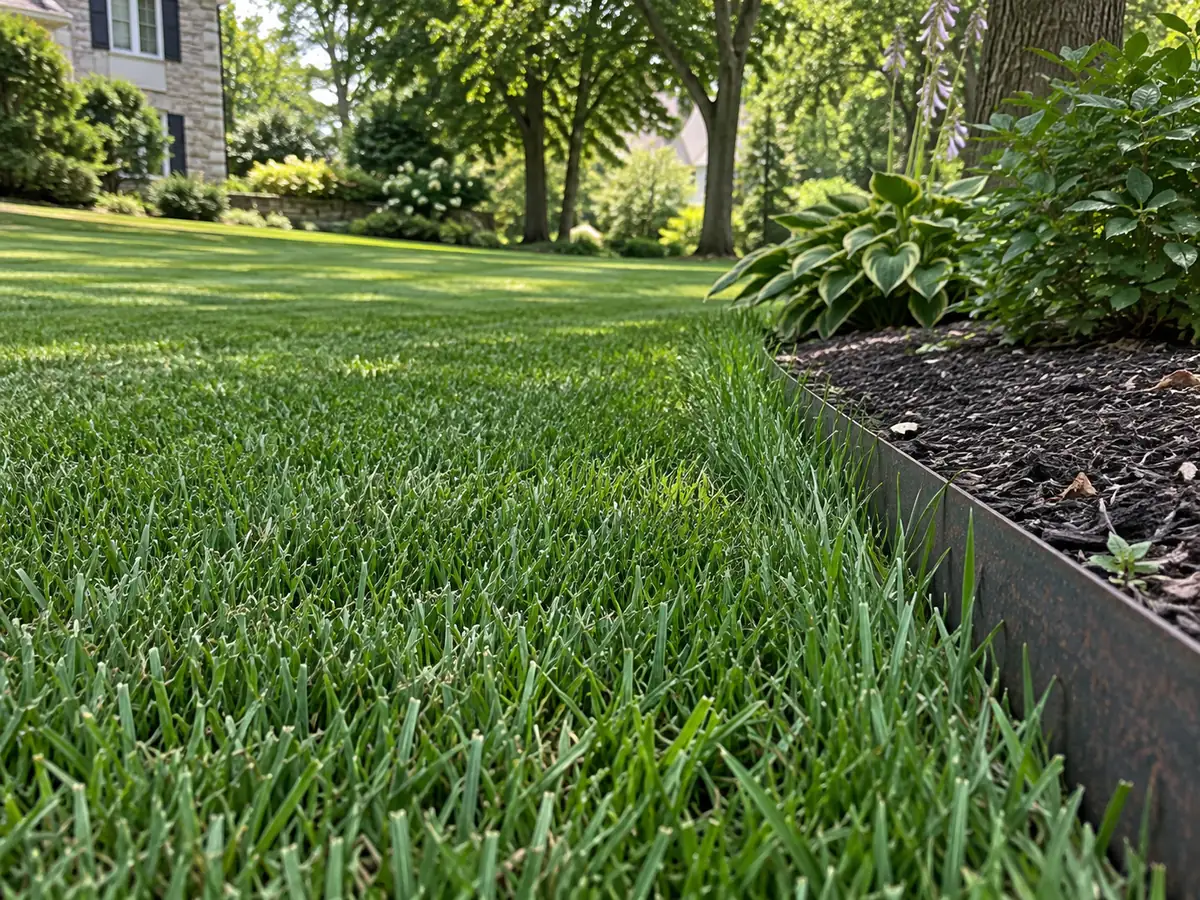
Early–mid summer: stretch the interval when growth slows
Hot, dry stretches slow cool-season grass. The lawn may look like it’s barely moving. Mowing on autopilot every week can still be fine if you’re only tipping the top—but if you’re barely collecting clippings, you can often wait.
Watch for:
- Footprints that stay pressed into the grass longer (early drought stress).
- Thinning in sunny bank areas while shady corners stay longer.
- Crabgrass and other weeds filling gaps if the turf is tired—those aren’t fixed by mowing alone, but short, frequent cuts on weeds that are already seeding can spread the problem.
Keep the blade higher in summer heat. Taller grass shades the soil a bit and helps roots through stress. Dropping height to “make it look golf-course short” on a residential Montco lot usually backfires by mid-July.
Late summer into fall: growth returns—so should your schedule
When nights cool and rain returns, many lawns wake back up. Fall is also when people aerate, overseed, or push recovery after summer thin spots. That means mowing matters again: new seed needs a sensible height, and thick fall growth can mat if you skip too long.
Fall leaf drop complicates things. A light layer of leaves can be mulched with the mower on some visits. Heavy leaf cover needs a real cleanup so you’re not shredding wet mats into the turf week after week. That’s a different service from routine mowing—worth planning before October gets busy.
Shade, clay, and compact lots: why your neighbor’s schedule isn’t yours
A sunny front lawn in King of Prussia and a maple-shaded backyard in Ardmore won’t grow at the same pace. Clay that stays wet after rain can keep one strip lush while a compacted path near the gate stays thin. On smaller lots, you also notice missed edges and long strips against fences more quickly—so the quality of each visit matters as much as how often someone shows up.
Adjust frequency by zone if needed. Some homeowners mow the front on a tighter rhythm for curb presentation and let the deep shade out back go a few extra days. Just don’t let any area get so long that the catch-up cut damages it.
Weather delays and the “skip then scalp” mistake
Thunderstorms, saturated soil, and lingering puddles are part of our summers. Driving a mower on soggy ground leaves ruts that show for weeks. A short delay is better than tire marks through the front yard.
When you resume:
- Wait until the surface firms enough that footprints don’t fill with water.
- Keep height up for the first cut after a long skip.
- Bag or carefully mulch only if clippings aren’t forming wet clumps.
- Edge and blow off so the property looks intentional again, not just shorter.
If you’re on a service schedule, ask how rain delays are handled—do they shift the whole route, squeeze you in midweek, or wait until the next regular day? Knowing that beats wondering why the grass hit ankle height.
A simple decision guide for homeowners
Use this when you’re deciding whether to mow this weekend:
- Mow soon if growth is obvious, seed heads are forming, or you’re past about a week in peak spring/fall.
- Wait a few days if heat has stalled growth and you’d only be cutting tips—and the lawn still looks even.
- Raise the deck whenever you’re tempted to cut short to “hold” a longer interval.
- Don’t mow soggy soil just to keep a calendar streak.
- Plan leaf strategy separately once fall drop starts in earnest.
Getting a schedule that fits your property
Worthy Landscaping sets lawn visits around how your turf actually grows on site—not a one-size slogan. Our lawn care services cover homes through Montgomery, Delaware, and Chester Counties and the Main Line / western Philadelphia suburbs. Seasonal add-ons like cleanup or aeration can sit beside routine mowing when the year calls for them; see our seasonal services for how that fits the calendar.
If you want a rhythm that matches your lot’s sun, soil, and how you use the yard, request an estimate through contact us, email contactus@worthylandscaping.com, or call (215) 490-8474. Worthy Landscaping is based in Bridgeport, PA—happy to walk the property and talk frequency in real terms.