If your lawn feels hard underfoot, water sits in footprints, or grass thins no matter how often you mow, the soil may be part of the story. Compacted ground is common on southeastern PA properties—especially where clay is heavy, kids and dogs run the same routes, or construction traffic once packed the yard.
Core aeration and overseeding won’t turn a hardpack lot into a golf fairway overnight. They do address specific problems in a practical way. Here’s what each step is for.
Compaction in plain language
Soil particles pressed together leave less room for air, water, and roots. On the surface you notice:
- Water beading or running off instead of soaking in
- Thin turf in traffic lanes
- A hollow or “thunky” feel under heels
- Grass that stresses faster in summer heat
Clay soils common around Montgomery County hold water when wet and set up firm when dry. That swing makes compaction effects easy to feel after a busy season. Shade doesn’t cause compaction by itself, but thin shade turf shows wear sooner, so the same footpath looks worse under a maple than in open sun.
What core aeration actually does
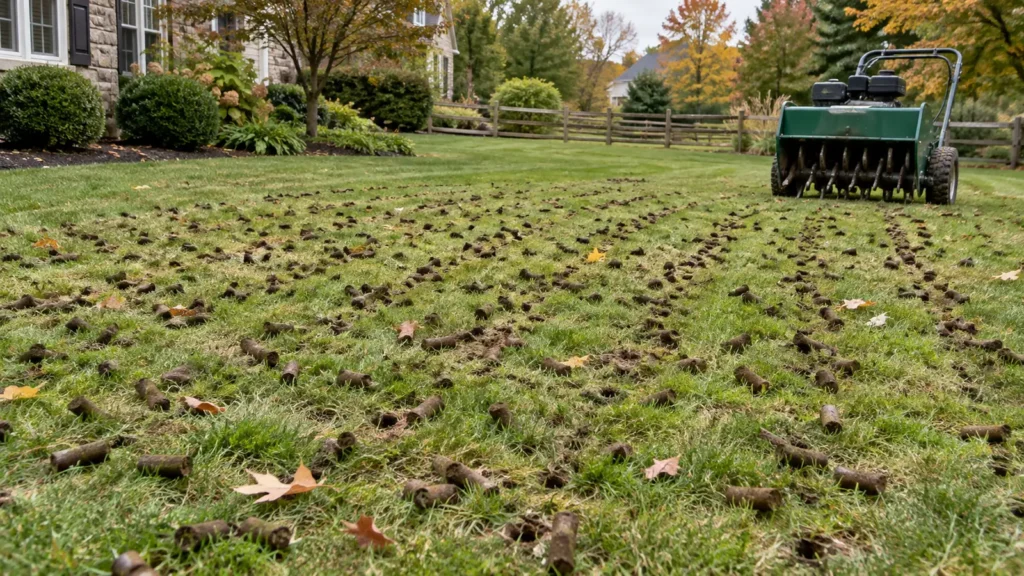
Core aeration pulls small plugs of soil out of the lawn, leaving open holes. Those holes temporarily reduce surface density, help water and air move into the root zone, and create pockets where seed can settle if you overseed the same day.
A few clarifications:
- Cores on the surface are normal. Plugs break down with rain and mowing; you usually leave them to dissolve rather than raking every one away.
- Spike-only rolling isn’t the same. Punching holes without removing plugs can sometimes worsen compaction at the sides of the hole. Core removal is the method people mean for relief.
- Timing matters. Cool-season lawns in our area are often aerated in early fall when grass can recover and new seed can establish in friendlier temperatures. Spring aeration happens too; fall is a frequent preference when schedules allow.
- Wet soup or brick-dry clay both fight the machine. Soil should be moist enough for tines to penetrate, not flooded and not concrete.
Aeration is a soil-structure move. It doesn’t kill weeds by itself, doesn’t replace missing sun, and doesn’t fix a graded puddle in the middle of the yard. Pair expectations with the real limit.
What overseeding adds
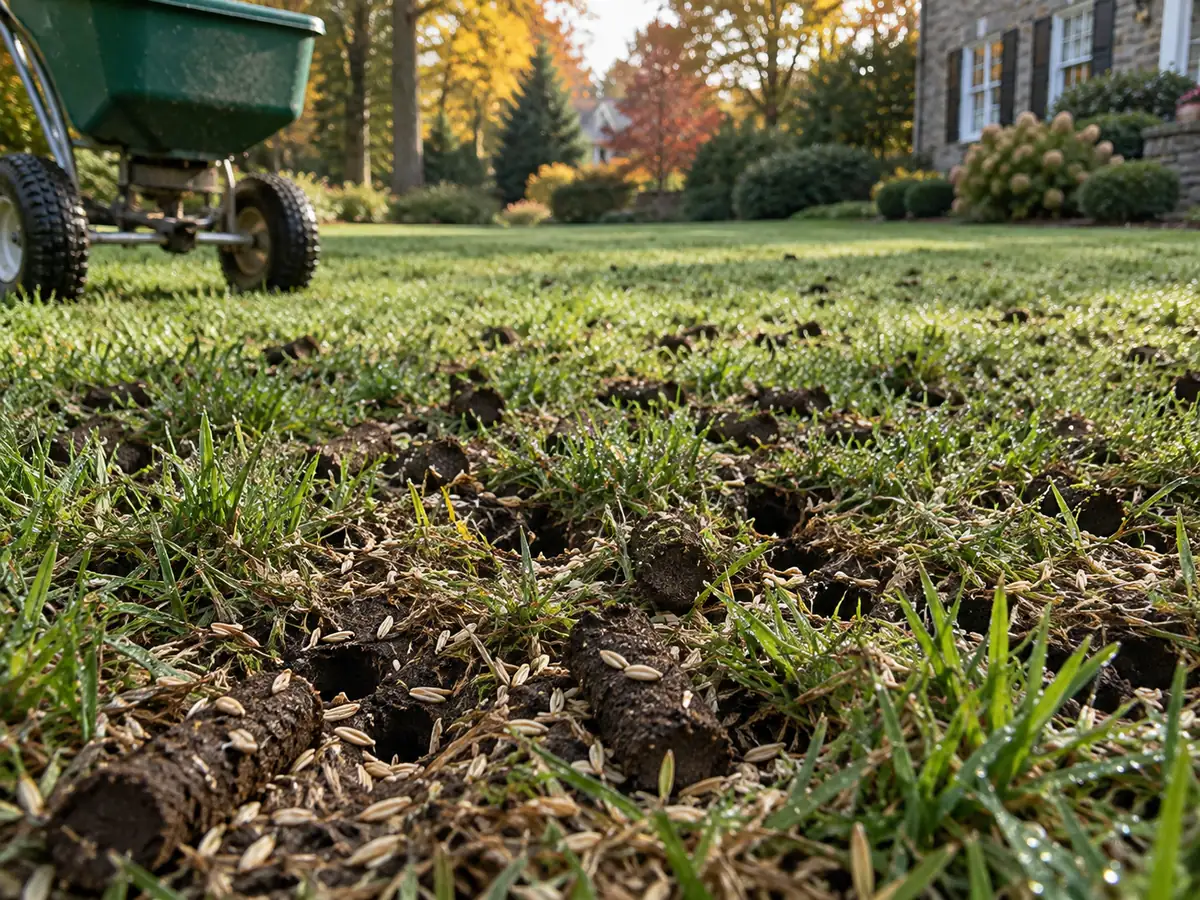
Overseeding spreads grass seed into existing turf to thicken coverage. After aeration, seed falls into holes and onto opened soil instead of sitting on a thatchy mat where it dries out.
Overseeding helps when:
- Turf is thin but the grade and drainage are basically okay
- Traffic wear has opened gaps
- You want denser cover heading into fall and next spring
It struggles when:
- Dense shade means grass was never going to thrive
- Standing water kills seedlings
- Dogs create daily urine spots you never rest
- You expect a brand-new lawn color in ten days without watering or germination time
Seed needs moisture and time. If you can’t support early watering after a fall seeding (within reason for your schedule and local watering rules), talk about timing before you buy the bag of seed on the service visit.
Why the two are often paired
Aeration without seed still helps the soil breathe. Seed without aeration can work on soft, open soil—but on compacted clay, a lot of seed never gets a fair start. Same-day aeration plus overseeding is a common pairing because the holes are ready receivers.
A typical process look:
- Mow at a sensible height beforehand if the turf is long
- Core aerate the agreed areas
- Spread seed appropriate for sun/shade conditions on the lot
- Optionally add a light soil or compost topdress in some programs (ask what’s included; don’t assume)
- Keep traffic lighter while seed germinates
- Resume mowing when new grass is ready—not by scalping early
Results show gradually. Thickening over weeks and into the next growing season is normal. Instant carpet is sod territory, not seed.
What aeration and overseeding do not fix
Be wary of treating them as cure-alls.
- Poor grading / chronic puddles need drainage or regrading conversations.
- Heavy thatch extremes may need more than one aeration visit or other cultural changes.
- Wrong grass for deep shade may need landscape redesign (groundcovers, beds) instead of more seed.
- Neglected mowing and edge work still show; aeration won’t hide a fuzzy walk line.
- Pest or disease outbreaks need identification; punching holes isn’t a fungicide.
A honest plan sometimes sequences aeration/seed after a cleanup or after adjusting how the lawn is cut. See our broader lawn care approach for how maintenance supports recovery.
Is your lawn a good candidate? Quick checks
- Push a screwdriver into the soil when it’s moist. Extreme resistance in traffic areas suggests compaction worth addressing.
- Look at thin lanes where people walk from driveway to door.
- Note whether spring rain sits on the surface longer than it used to.
- Ask whether the yard saw construction, new hardscape, or heavy equipment in recent years.
If the lawn is already dense, soft, and even, yearly aeration may still help some properties—but it’s not mandatory theater. Focus on yards that show the symptoms.
Decision points before you schedule
- Fall vs. spring for your calendar and how you can water new seed.
- Whole lawn vs. worn zones — sometimes targeting paths is enough.
- Sun maps — different seed or expectations for shade pockets.
- Pets and kids — plan temporary lighter use after seeding.
- Follow-up mowing height — keep it up so new plants aren’t scalped.
Ask about aeration that matches clay-and-traffic yards
Worthy Landscaping provides lawn aeration for homes in Montgomery, Delaware, and Chester Counties and the Main Line / western Philadelphia suburbs. We explain what the visit can fix on your soil—not what a brochure promises for every lawn in America.
If you’re seeing hard ground and thin cover, reach out through contact us, email contactus@worthylandscaping.com, or call (215) 490-8474. We’re at 427 Jefferson Street, Bridgeport, PA 19405. A quick look at the yard usually tells us whether aeration, overseeding, both, or a different fix belongs first.