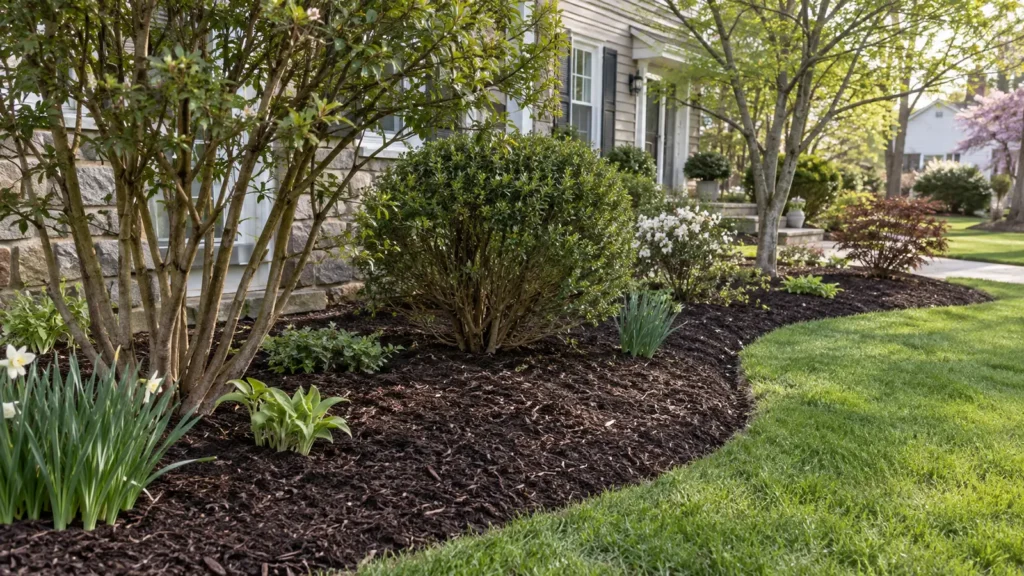
Fresh mulch hides a lot of sins for about two weeks. Then the weeds return at the thin spots, the edge melts into the lawn, and you’re left wondering whether you mulched at the wrong time or skipped the prep that actually makes mulch last.
On Main Line and nearby Montgomery County lots—compact beds, mature shade, and soil that often leans heavy—timing and preparation matter as much as the mulch itself.
What mulch is doing in a planting bed
Mulch isn’t decoration first. Done right, it helps moderate soil moisture, reduces some weed pressure, keeps mower wheels and string trimmers off stems, and gives beds a finished look. Done wrong—piled against bark, laid over a jungle of weeds, or dumped without an edge—it can smother roots, invite pests at the trunk flare, and slide into the grass by the next heavy rain.
So the question “When should we mulch?” is really “When can we prep the bed well and give the new layer a clean start?”
Spring refresh: the most common window
Many homeowners mulch in spring because beds are visible again, weeds are just waking up, and people are already thinking about curb appeal.
Spring works well when you:
- Clear leftover leaves and winter debris first
- Pull or treat weeds while they’re small
- Redefine the bed edge so mulch has a shoulder to stay behind
- Apply a moderate depth (often in the ballpark of two to three inches for wood mulch on established beds—adjust for site and material) without burying crowns of perennials or covering woody trunk flares
Spring mulch after soil has thawed and drained enough that you’re not working soup. Clay beds common in our area stay wet; walking them too early compacts the soil you were trying to protect.
If you’re planting new shrubs or dividing perennials, mulch after that work so you’re not digging through a brand-new layer twice.
Fall mulch: useful, with a few caveats
Fall mulching can look sharp for Thanksgiving photos and helps insulate roots through winter swings. It also lands in the same season as leaf drop—so sequence matters.
Practical fall approach:
- Get major leaf piles out of the beds (or schedule leaf work so you’re not mulching onto a leaf mat).
- Cut back what you’ve agreed to cut back; don’t bury diseased foliage you meant to remove.
- Edge and weed as you would in spring.
- Mulch with enough time for crews to work before the ground is frozen and schedules pack with last-minute requests.
Fall mulch won’t stop leaves from landing on top. You may still want a light leaf pass later. Think of fall mulch as bed structure and winter protection, not a force field against oaks.
Midsummer top-ups: when they help and when they don’t
Sometimes spring mulch thins by July—washouts on a slope, heavy foot traffic near a hose bib, or beds that were under-mulched to begin with. A light top-up can restore coverage.
Midsummer is a weaker time for a full tear-out and deep remulch if heat is hard on plants and crews. It’s also when weeds set seed fast if you skip pulling before you cover. If the bed is already weedy, fix that first; mulch on top of seed heads is a short-lived cosmetic fix.
Edges and weeds: the two jobs that decide whether mulch “works”
Weeds. Mulch suppresses; it doesn’t erase a bed full of established roots. Pull what you can see. For persistent beds, a cleanup visit before mulch is often smarter than buying more cubic yards. Our property cleanup work sometimes precedes mulch for that reason.
Edges. A crisp trench or defined shoulder stops mulch from bleeding into turf and stops grass from creeping into the bed. Without an edge, you’re refreshing the same messy boundary every year. Fresh color with a collapsed edge still reads unfinished from the sidewalk.
If you only budget for one upgrade beyond the mulch delivery, make it edging.
Depth, volcanoes, and shade beds
A few local habits to avoid:
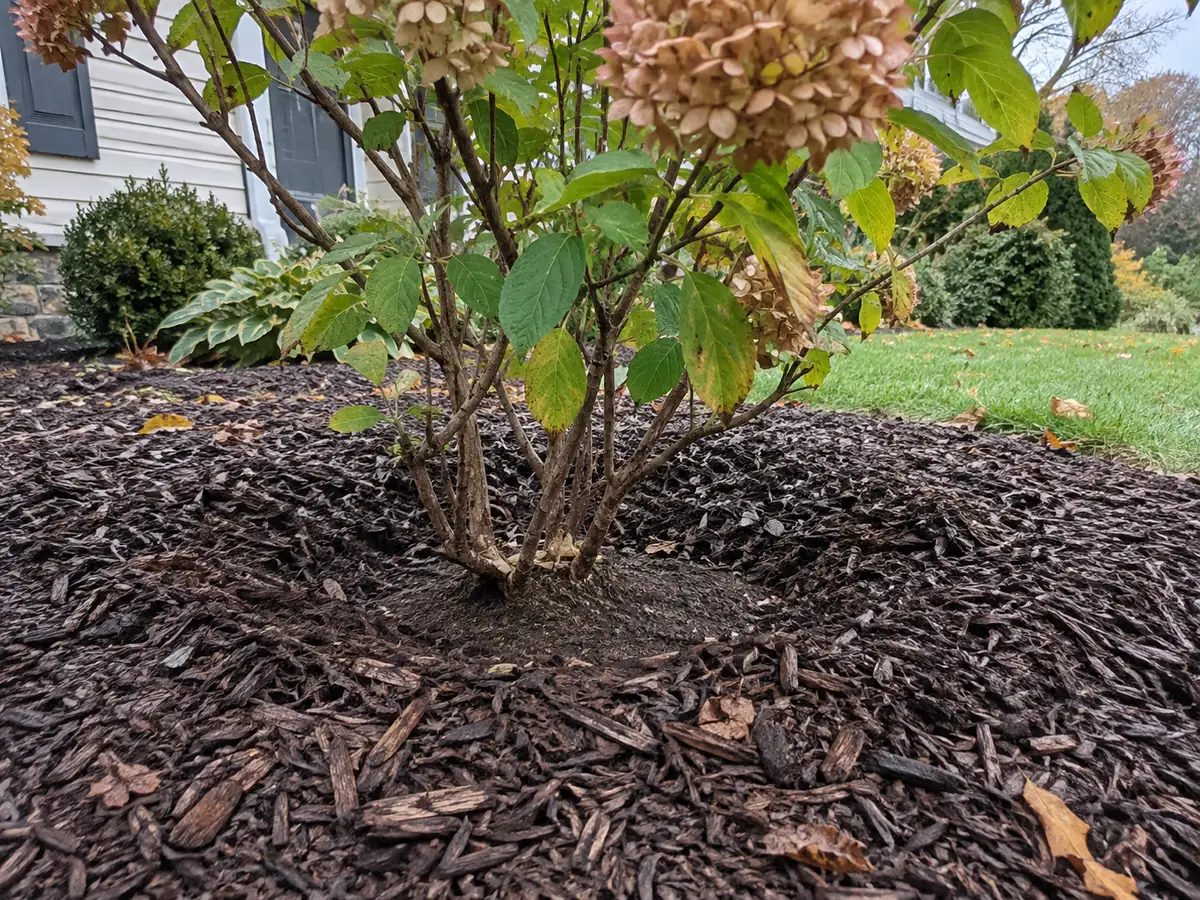
- Mulch volcanoes against tree trunks and shrub stems. Keep mulch pulled back from bark so the root flare can breathe.
- Smothering depth. More is not better. Excess mulch holds too much moisture against stems and can keep soil overly wet in clay.
- Ignoring shade. Deep shade under maples often means thinner plantings and slower-drying soil. Those beds may need less frequent heavy mulch and more attention to leaves that mat on top.
Color and material (dyed vs. natural hardwood, etc.) are preference and availability choices. Timing and prep still matter more than dye lot.
A simple timing decision checklist
Use this when you schedule:
- Mulch soon in spring if beds are clearable, weeds are manageable, and you want the finished look for the growing season.
- Mulch in fall if spring got away from you, you’re planting in autumn, or you want winter bed cover—after leaves are managed.
- Wait if beds are still buried in leaves, soaked clay won’t support foot traffic, or a cleanup/edge day hasn’t been scheduled yet.
- Top up lightly if coverage is thin but weeds and edges are already in good shape.
- Don’t mulch over a neglected weed carpet and expect quiet beds until next year.
Schedule mulch that starts with the bed, not the truck
Worthy Landscaping provides mulching services for homes in Montgomery, Delaware, and Chester Counties and the Main Line / western Philadelphia suburbs. We care about when the truck arrives—but we care more that the bed underneath is ready.
Want a timing recommendation for your beds? Contact us through contact us, email contactus@worthylandscaping.com, or call (215) 490-8474. We’re at 427 Jefferson Street, Bridgeport, PA 19405. A quick site look usually tells us whether you’re in a spring refresh, a fall reset, or a prep-first situation.