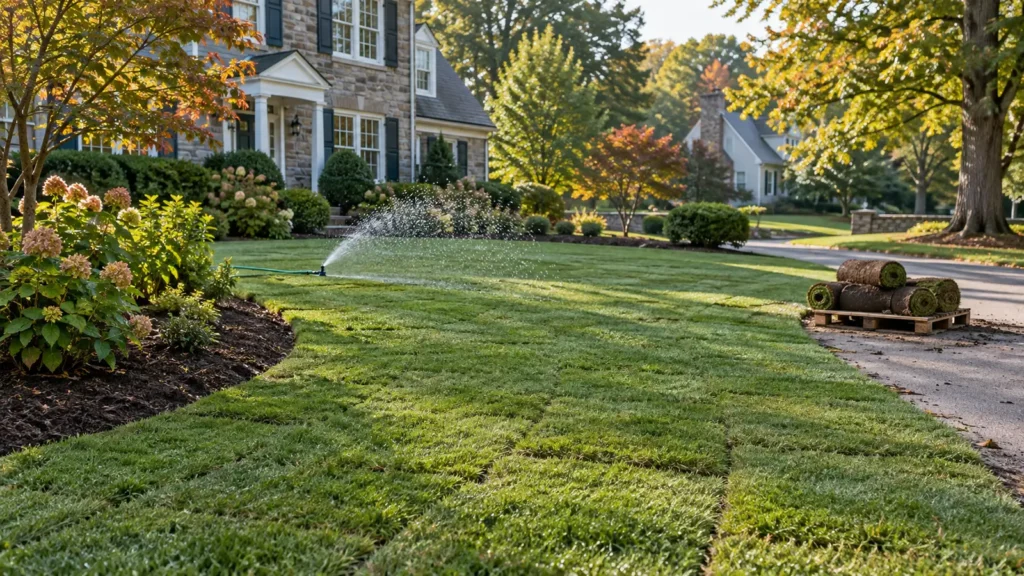
Bare dirt before a graduation party. A dog path that finally went to mud. A renovation that chewed up the front strip between sidewalk and porch. When you need green coverage on a deadline, the conversation turns into sod vs. seed.
Both can grow a good lawn. They don’t work on the same timeline or budget of attention. This guide helps you choose a faster fix when speed actually matters—and when seed (or aeration plus seed) is still the smarter play.
What “faster” really means
Sod is mature turf harvested in rolls or slabs and laid on prepared soil. You get instant cover: erosion control the first day, a usable-looking lawn within short order, and fewer weeks of staring at dirt. Roots still need time to knit into your soil—so “instant lawn” is instant cover, not instant invincibility.
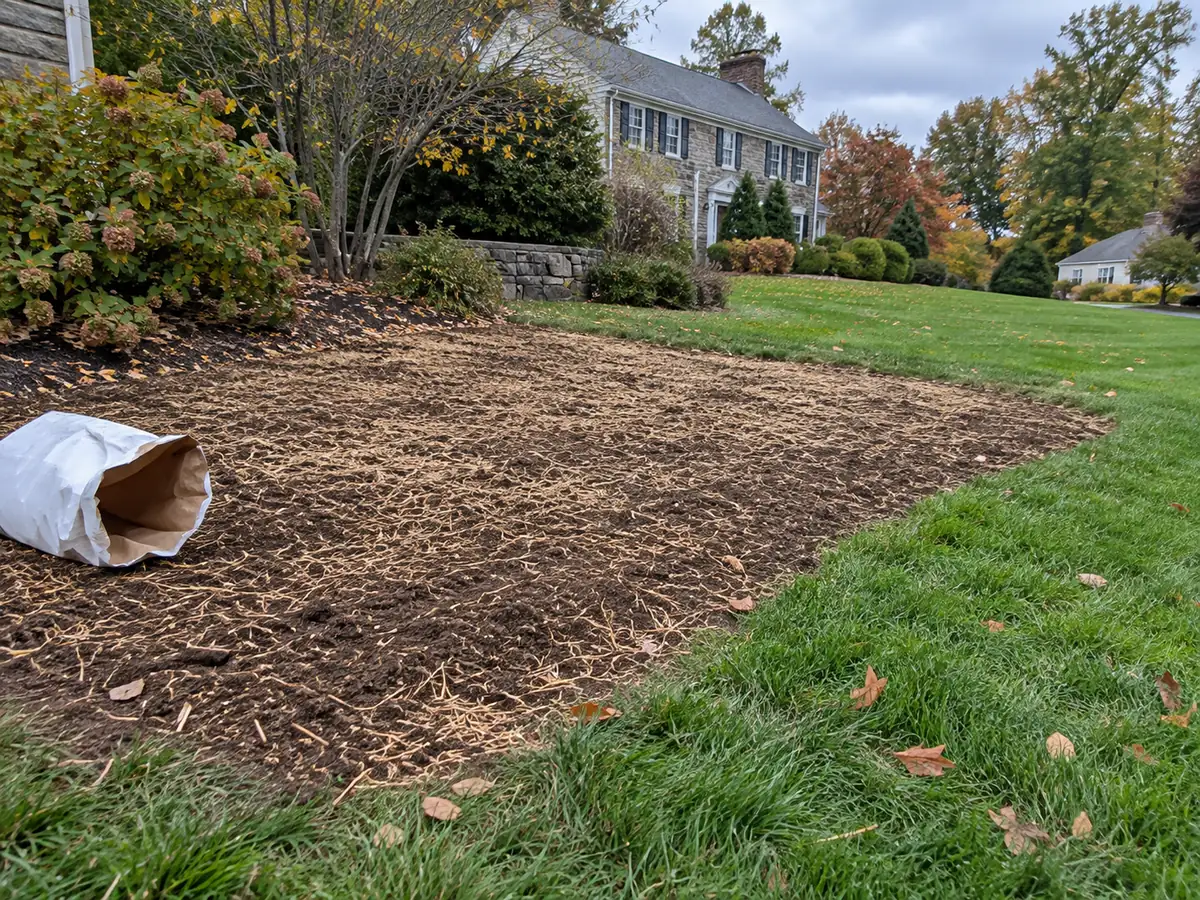
Seed is slower to hide soil. Germination and early growth take weeks, and the surface remains delicate while seedlings establish. Cost per square foot is often lower, and you can choose mixes for shade or sun with flexibility—but you don’t get a party-ready carpet next weekend.
If the deadline is real, sod earns its place. If the deadline is “sometime this year,” seed or overseeding may be enough.
When sod is practical
Sod tends to make sense when:
- You need cover quickly for an event, listing photos, or to stop mud tracking into the house
- Slopes would wash seed away before it sprouts
- High-visibility strips (front walk flanks, curb lawn) matter more than waiting a season
- You’re patching a defined area with good access for delivery and staging
- You can water the new sod as directed while it roots (sod is not zero-maintenance just because it’s green on day one)
Site prep still decides success. Sod laid on compacted clay, buried construction debris, or uneven grade will mirror those problems. Rolling out green rugs doesn’t fix a bowl that holds water.
When seed (or aeration + seed) is the better tool
Choose seed-focused approaches when:
- Large areas make sod volume impractical for your project scope
- Turf is thin rather than bare, and you mainly need thickening—see lawn aeration paired with overseeding
- Shade mixes or specific blend preferences matter and you’re willing to wait
- Timing aligns with strong germination windows (often early fall for cool-season lawns here)
- You can protect the area from heavy feet while seedlings establish
Seed also forgives complex bed shapes and tree roots where cutting sod puzzle pieces would be tedious—though sod can be fitted carefully when needed.
Local context: clay, shade, and compact lots
Many Montgomery County and Main Line yards combine heavy soil with mature trees. That combo means:
- Prep matters more than product. Loosen compacted surfaces, fix obvious grade issues, and don’t trap sod on a hardpan skin.
- Shade expectations stay honest. Sod won’t create sun grass under a dense maple. Choose appropriate turf and accept thinner performance in deep shade—or redesign the bed.
- Watering logistics. Smaller lots can be easier to keep moist; just don’t assume an automatic system covers every new corner unless you’ve checked heads and spray patterns.
- Edges and walks. New sod along sidewalks should sit flush so mowers don’t catch a lip and so drainage doesn’t undercut the seam.
Side-by-side decision points
Use this when you’re weighing options:
- Deadline — Need cover in days? Lean sod. Have a month-plus? Seed may win.
- Size — Pocket patches and front panels favor sod; wide rear yards may favor seed unless budget and water support sod.
- Slope / wash risk — Sod holds; seed needs protection.
- Traffic — Dogs and kids return sooner on rooted sod (still carefully at first) than on seedlings.
- Existing thin lawn — Overseeding after aeration often beats tearing everything out.
- Follow-through — Whichever you pick, watering and light early traffic control aren’t optional footnotes.
What a sod installation visit generally involves
While every site differs, a serious sod job usually includes:
- Measuring and confirming the area
- Removing failed turf or debris as scoped
- Rough grading and surface prep so rolls sit on soil that can accept roots
- Softening or tilling compacted layers when needed (within the agreed scope)
- Laying sod in staggered seams, snug joints, and clean edges at walks
- Rolling or firming for soil contact
- Initial watering guidance so roots chase moisture downward
Ask what’s included in prep. The cheapest roll price means little if prep is skipped.
Aftercare: where both methods succeed or fail
Sod. Keep it consistently moist while roots establish; avoid peeling corners by lifting early to “check” too often; hold off heavy play until it resists a gentle tug. First mows should follow the installer’s height guidance—don’t scalp new sod to match an old short preference.
Seed. Keep the surface damp (not flooded) through germination; protect from birds and feet as you can; mow only when seedlings reach a proper height and the soil isn’t pulling up with the mower.
Skipping aftercare is the main reason both methods get blamed unfairly.
Ready to Choose the Right Lawn Repair?
Worthy Landscaping installs sod near you for residential properties across Montgomery, Delaware, and Chester Counties and the Main Line / western Philadelphia suburbs. If seed or aeration fits better, we’ll say so—speed is only useful when the method matches the yard.
Talk through your deadline and photos via contact us, email contactus@worthylandscaping.com, or call (215) 490-8474. We’re at 427 Jefferson Street, Bridgeport, PA 19405. Tell us how soon you need usable green, and we’ll help you choose sod, seed, or a targeted patch plan without the hard sell.