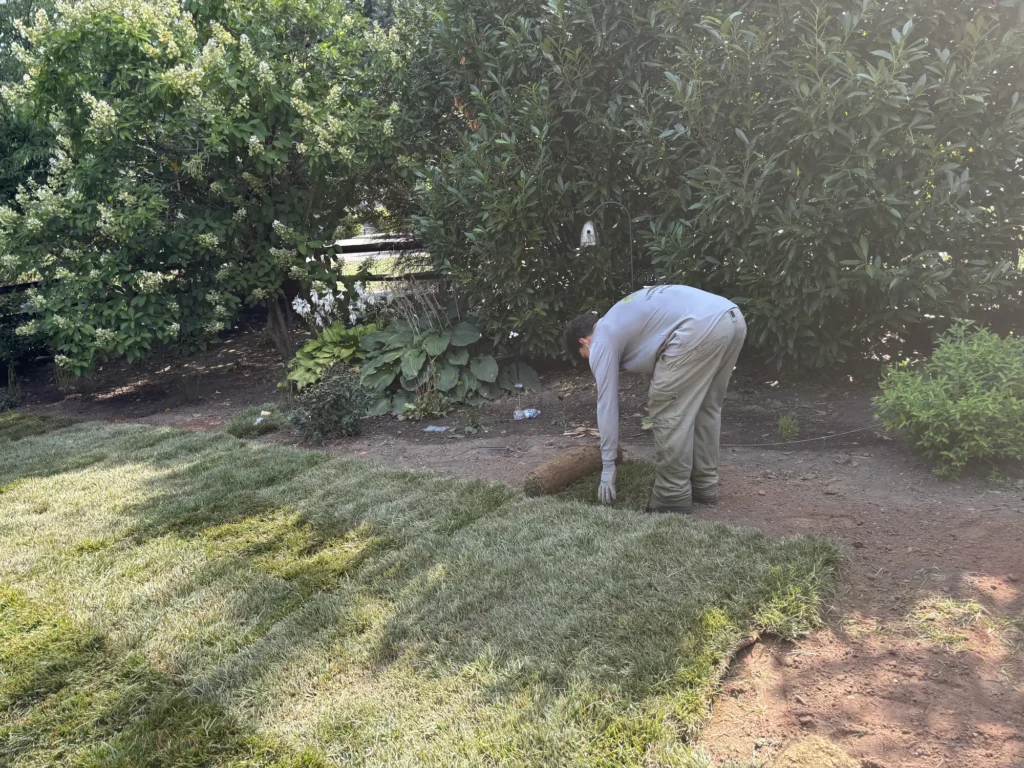
New Lawn Installation with Sod in Narberth, PA

Another Sod Service Complete
In Montgomery County!

Turn Small Lawns Around Established Plantings Into a Clear Installation Project

Replacing a failing lawn with sod can make sense when the problem involves small lawn areas where existing plantings and repeated repairs compete for limited space. Worthy Landscaping evaluates the proposed Narberth, PA work area before recommending a project size, paying close attention to compact beds, street-facing lawns, walkways, and established shrubs that should remain protected. The estimate can separate necessary preparation from optional additions and clarify whether the scope should be the failed turf zones while healthy plantings remain protected. The desired result is an integrated lawn that complements existing plantings rather than looking newly patched, with a care plan matched to the conditions on site.

How Is a Worn Lawn Turned into a Sod-Ready Surface?

For an integrated lawn refresh, the work may include removal, base preparation, fine grading, sod placement, rolling or firming where appropriate, and cleanup of the selected project area. The order is shaped by careful staging through a smaller property without crowding plant material and the need to protect compact beds, street-facing lawns, walkways, and established shrubs that should remain protected. That discipline helps produce an integrated lawn that complements existing plantings rather than looking newly patched.

How Do You Decide Between a Full Reset and Selected Areas?

To support an integrated lawn that complements existing plantings rather than looking newly patched, before scheduling, decide which areas are truly part of the project and who will manage early watering. Sod can be a strong option when the project calls for the failed turf zones while healthy plantings remain protected, but preparation and care must be realistic for the site. Sharing close photos of edges and plants, dimensions, gate access, water availability, and shade notes helps Worthy identify access, quantities, and questions that need an on-site review.

Sod Installation • Montgomery County, PA

Professional sod installation services in Montgomery County, PA

At Worthy Landscaping, we provide expert sod installation services that give you an instant, lush green lawn without the long wait of traditional seeding. Our team prepares the soil correctly, installs high-quality sod, and makes sure your new lawn is healthy, durable, and ready to enjoy.

We install sod throughout King of Prussia, Wayne, Conshohocken, Ardmore, Bryn Mawr, Norristown, Plymouth Meeting, Whitemarsh and surrounding Montgomery County neighborhoods.

  • Instant curb appeal with a finished lawn on day one.
  • Proper grading and soil prep for long-term lawn health.
  • Ideal for replacing patchy grass, new construction, or bare yards.

Sod Work That Accounts for the Whole Property

Given careful staging through a smaller property without crowding plant material, a useful sod estimate explains how the work fits the existing yard. Worthy reviews compact beds, street-facing lawns, walkways, and established shrubs that should remain protected, identifies careful staging through a smaller property without crowding plant material, and connects those logistics to the goal of a polished green surface sized to the actual usable yard. For small lawns around established plantings, this approach keeps the installation focused on the places where a new surface will make the clearest difference.

Sod Installation Services with Worthy landscaping

How our sod installation works

What to expect from the Worthy sod process

Every lawn is different, but our process is consistent: careful prep, quality sod, and clear communication so your new lawn stays healthy long-term.

1

On-site visit & planning

We walk the property with you, measure the lawn, check shade and drainage, and recommend the right sod and grading plan for how you use the space.

2

Soil preparation & grading

Our crew removes old turf and debris, loosens and levels the topsoil, and grades the area so water moves away from the house and low spots. Good prep is critical for deep, healthy roots.

3

Fresh sod delivery & installation

We install fresh sod the same day it arrives, staggering seams, cutting clean edges, and rolling the lawn so the sod makes tight contact with the prepared soil.

4

Watering & after-care guidance

Before we leave, we water the new lawn and review a simple watering and mowing schedule, so you know exactly how to care for your sod over the first 6–8 weeks.

What Happens on Sod Installation Day?

With controlled watering near beds, edge protection, and reduced early foot traffic planned, installation day is organized so preparation moves ahead of placement and finished sod is not used as a work lane. The crew follows careful staging through a smaller property without crowding plant material, refines the selected surface, and brings rolls into the project in a controlled sequence. A final review checks whether the installed area supports an integrated lawn that complements existing plantings rather than looking newly patched.

How Do Weather and Site Conditions Affect Early Care?

For small lawns around established plantings, new sod should be watered and protected according to the actual weather and soil conditions on the property. The plan for controlled watering near beds, edge protection, and reduced early foot traffic should be clear before the crew leaves or before the installation date is confirmed. That approach helps maintain an integrated lawn that complements existing plantings rather than looking newly patched without overwatering or unnecessary disturbance.

New lawn care

Watering & care guide for fresh sod

The first few weeks after sod installation are the most important. Use this schedule as a guide and adjust slightly based on weather and how quickly the soil dries out.

Days 1–14: Keep it consistently moist
Water 2–3 times per day so the top few inches of soil stay damp, but not puddled. This helps the sod knit into the prepared soil.
Weeks 3–4: Fewer waterings, deeper soak
Shift to about once per day, running sprinklers longer so moisture reaches deeper roots and encourages a stronger lawn.
After 4 weeks: Normal lawn schedule
Most sod lawns in Montgomery County do best with deep watering 2–3 times per week depending on rainfall and summer heat.
First mowing & foot traffic
Wait until the grass is around 3" tall and feels well rooted before mowing. Avoid heavy play equipment or events until the lawn feels firm underfoot.
Can I install sod in the fall or winter?

Yes. Fall is one of the best times for sod installation in Montgomery County because cooler temperatures and natural rainfall help roots establish. Winter installs are possible when the ground isn’t frozen; the sod will stay dormant and begin growing again in spring.

How long does sod take to establish?

Most sod forms a basic root system in about 2–3 weeks. Full establishment typically takes 6–8 weeks when you follow the watering and mowing instructions we review on site.

Landscaping & Lawn-Care Services

From weekly trims to full property clean-ups, Worthy Landscaping keeps King of Prussia-area lawns looking their best.

“Tired of pretending the patchy lawn is “still coming in”? We’ll handle the prep, the sod, and the heavy lifting—just tell us about your yard and we’ll schedule a free on-site assessment.”

Begin with a Practical Sod Estimate

With plant protection and tight boundaries in view, the fastest way to clarify a sod project is to document the current condition and target area. For this Narberth scenario, provide close photos of edges and plants, dimensions, gate access, water availability, and shade notes. To support an integrated lawn that complements existing plantings rather than looking newly patched, the resulting estimate should make it clear what is included, what remains optional, and what the homeowner should plan for after installation.
For an integrated lawn refresh, the estimate process may continue with a property visit when grade, access, or existing-turf conditions cannot be judged from photos. That sequence supports an integrated lawn that complements existing plantings rather than looking newly patched.

Sod Installation Services — Frequently Asked Questions

1. Is sod really better than seeding, or should I just seed again?
Seed can work if you have time, ideal conditions, and you’re okay with an uneven look while it fills in. Sod gives you an instant, fully covered lawn with a much higher success rate. You’re getting mature turf that already has density and coverage; your main job is watering and basic care while the roots knit into the soil. Seed is cheaper up front but is more vulnerable to washouts, weeds, and bare spots, and many homeowners end up reseeding the same areas repeatedly. For a lawn that needs a true reset—not just a touch-up— sod is usually the more reliable, predictable option.
2. What exactly happens during a professional sod installation?
A proper sod install is much more than “roll it out and go.” We start by walking the yard with you to understand how you use the space and to flag problem areas like shade, compaction, or drainage. Then we remove existing turf where needed, grade and smooth the soil, and address low spots so water doesn’t pool. Next we lay sod in a staggered pattern, press seams tight, and trim edges around beds, walks, and hardscape. Finally, we water everything in, check for gaps, clean up the site, and leave you with a clear watering and mowing plan.
3. How should I prepare my property before sod installation day?
You don’t need to do heavy work—that’s our job—but a few small steps help. Pick up toys, hoses, and lawn furniture so we have clear access. If you have irrigation or invisible fencing, let us know where heads and lines are so we can avoid them while grading. Unlock any gates, secure pets, and tell us about soft spots in the yard or tight access at the sides of the house. We’ll handle turf removal, soil prep, and grading, but clear access and good communication keep the day running smoothly.
4. When is the best time of year to install sod in our area?
In this region, the two prime windows are early fall and spring. Early fall is ideal because soil is still warm, air temperatures are cooler, and weeds are less aggressive, so roots establish quickly before winter. Spring also works very well, with cool weather, consistent moisture, and a long growing season ahead. Summer installations can be done, but they require much more attentive watering and monitoring to prevent heat stress. Winter installs are generally avoided if the ground is frozen or storms are frequent. We’ll help you pick timing that fits both the forecast and your schedule.
5. How long does it take for new sod to root, and when can we use the lawn?
Most sod begins to knit into the soil within about 7–10 days and develops stronger roots over 3–4 weeks, depending on weather and watering. Light foot traffic, like carefully walking across to water, is usually fine after the first week as long as the sod doesn’t shift when you step on it. For kids, pets, and regular use, we typically recommend waiting around three weeks. Mowing can start once the grass reaches 3–4 inches and feels firmly attached when you tug gently. We’ll give you timing guidance tailored to your installation and conditions.
6. How much and how often should I water new sod?
New sod needs consistent moisture in the root zone, not constant puddles. During the first week, plan on watering once or twice a day so the soil stays damp 3–4 inches down—how long that takes per zone depends on your system and soil type. In weeks two and three, you’ll gradually reduce frequency but water more deeply to encourage roots to grow down instead of staying shallow. After that, you transition to a regular lawn schedule based on rainfall. We’ll leave you with a simple, written watering plan so you’re not guessing.
7. What type of sod do you use, and how do you choose it for my yard?
The best sod for you depends on sun, shade, foot traffic, and how much maintenance you want to do. In our area, that often means a cool-season blend designed for local winters and summers. Sunny, high-traffic zones need varieties that recover quickly from wear, while shady areas do better with mixes that tolerate lower light. During your assessment we’ll map out sun patterns, talk about how you use the space, and recommend sod that fits your yard instead of forcing a one-size-fits-all choice.
8. Once the sod is established, what does long-term care look like?
After the first month, your sod behaves like a regular lawn—and regular lawns need consistent care to stay healthy. That means mowing at the right height (usually on the higher side to protect roots), watering deeply but less often, and following a sensible fertilization schedule instead of over-feeding. Periodic aeration and overseeding help maintain density, especially in high-traffic areas. We’ll review a realistic maintenance plan with you so you know what is truly important and what is optional, based on how perfect you want the lawn to look and how much time you want to spend on it.

Turn Small Lawns Around Established Plantings Into a Clear Installation Project

Replacing a failing lawn with sod can make sense when the problem involves small lawn areas where existing plantings and repeated repairs compete for limited space. Worthy Landscaping evaluates the proposed Narberth, PA work area before recommending a project size, paying close attention to compact beds, street-facing lawns, walkways, and established shrubs that should remain protected. The estimate can separate necessary preparation from optional additions and clarify whether the scope should be the failed turf zones while healthy plantings remain protected. The desired result is an integrated lawn that complements existing plantings rather than looking newly patched, with a care plan matched to the conditions on site.

How Is a Worn Lawn Turned into a Sod-Ready Surface?

For an integrated lawn refresh, the work may include removal, base preparation, fine grading, sod placement, rolling or firming where appropriate, and cleanup of the selected project area. The order is shaped by careful staging through a smaller property without crowding plant material and the need to protect compact beds, street-facing lawns, walkways, and established shrubs that should remain protected. That discipline helps produce an integrated lawn that complements existing plantings rather than looking newly patched.

How Do You Decide Between a Full Reset and Selected Areas?

To support an integrated lawn that complements existing plantings rather than looking newly patched, before scheduling, decide which areas are truly part of the project and who will manage early watering. Sod can be a strong option when the project calls for the failed turf zones while healthy plantings remain protected, but preparation and care must be realistic for the site. Sharing close photos of edges and plants, dimensions, gate access, water availability, and shade notes helps Worthy identify access, quantities, and questions that need an on-site review.

Sod Work That Accounts for the Whole Property

Given careful staging through a smaller property without crowding plant material, a useful sod estimate explains how the work fits the existing yard. Worthy reviews compact beds, street-facing lawns, walkways, and established shrubs that should remain protected, identifies careful staging through a smaller property without crowding plant material, and connects those logistics to the goal of a polished green surface sized to the actual usable yard. For small lawns around established plantings, this approach keeps the installation focused on the places where a new surface will make the clearest difference.

What Happens on Sod Installation Day?

With controlled watering near beds, edge protection, and reduced early foot traffic planned, installation day is organized so preparation moves ahead of placement and finished sod is not used as a work lane. The crew follows careful staging through a smaller property without crowding plant material, refines the selected surface, and brings rolls into the project in a controlled sequence. A final review checks whether the installed area supports an integrated lawn that complements existing plantings rather than looking newly patched.

How Do Weather and Site Conditions Affect Early Care?

For small lawns around established plantings, new sod should be watered and protected according to the actual weather and soil conditions on the property. The plan for controlled watering near beds, edge protection, and reduced early foot traffic should be clear before the crew leaves or before the installation date is confirmed. That approach helps maintain an integrated lawn that complements existing plantings rather than looking newly patched without overwatering or unnecessary disturbance.
Follow project-specific watering instructions, protect the newly installed sod from avoidable traffic, and ask Worthy about conditions affecting the specific installation.

Begin with a Practical Sod Estimate

With plant protection and tight boundaries in view, the fastest way to clarify a sod project is to document the current condition and target area. For this Narberth scenario, provide close photos of edges and plants, dimensions, gate access, water availability, and shade notes. To support an integrated lawn that complements existing plantings rather than looking newly patched, the resulting estimate should make it clear what is included, what remains optional, and what the homeowner should plan for after installation.
For an integrated lawn refresh, the estimate process may continue with a property visit when grade, access, or existing-turf conditions cannot be judged from photos. That sequence supports an integrated lawn that complements existing plantings rather than looking newly patched.