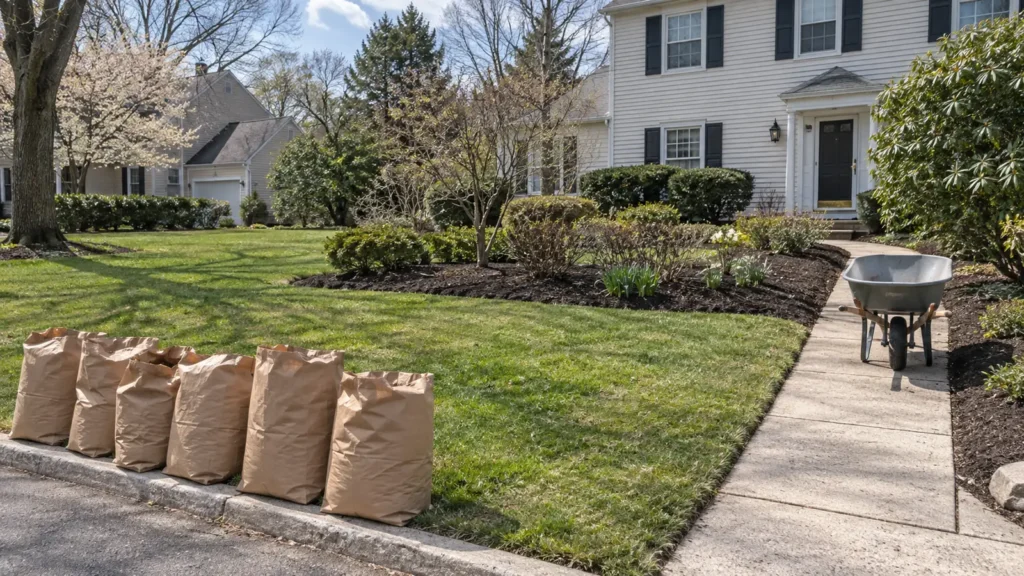
“Cleanup” can mean a two-hour blower pass or a full-day haul—and homeowners only learn which one they bought when the truck pulls away. This walkthrough explains what a Worthy property cleanup typically looks like from first look to final sweep, so you know how we think about scope, debris, and finish.
Every lot is different. A narrow Bridgeport twin with a fenced rear yard isn’t the same job as a wooded edge in Chester County. The sequence below is the process we aim for; the checklist at the end is what you should confirm before work starts.
Step 1: Walk the property and agree on what’s in (and out)
We start on site when we can, not only from a phone photo. Photos help for a rough idea; feet on the ground catch the pile behind the shed, the vine in the fence, and the soft spot the truck shouldn’t cross.
On that walk we note:
- Green waste vs. mixed debris (treated lumber, scrap, household junk—these may need different handling)
- Overgrowth that blocks gates, meters, AC units, or walkways
- Bed areas that need clearing before any future mulch
- Turf that’s under debris vs. turf that just needs mowing later
- Access: driveway width, locked gates, low wires, steep side yards
You should hear plain language: “We’ll remove this brush pile and cut the fence line back; we won’t rebuild the bed or prune the front hedge unless you add that.” Surprises after the fact help no one.
Step 2: Protect what stays and stage the work
Before cutting and hauling, we identify keepers: stacked firewood you want, pots, play sets, hose reels, and garden art. We also mark soft turf or wet zones where heavy loads would leave ruts—common on clay soils after rain.
Staging usually means:
- Clearing a path for debris movement to the driveway or truck
- Working from the farthest corner forward when it helps avoid tracking through finished areas
- Keeping walkways passable for the household during the visit when possible
If dogs are home or kids use the yard that afternoon, say so up front. Cleanup goes smoother with a simple access plan.
Step 3: Cut back overgrowth and gather debris
This is the visible part of the job. Depending on scope, crews may:
- Cut and stack brush and fallen limbs
- Clear weed stands and volunteer saplings from agreed areas
- Pull or cut vines off fences (with care so fence fabric isn’t damaged)
- Remove leaf mats or dumped piles that are part of the mess
- Collect scattered yard waste into haulable loads
We work to the written areas. “Whole property” should mean you’ve both walked the boundaries—including the strip outside a fence if you own or maintain it, and the rear corners people forget until the night before guests arrive.
Tools and methods match the material. Hand work in tight beds; larger cutting for thick brush; careful use of blowers so we’re not decorating the neighbor’s freshly washed car with the contents of your side yard.
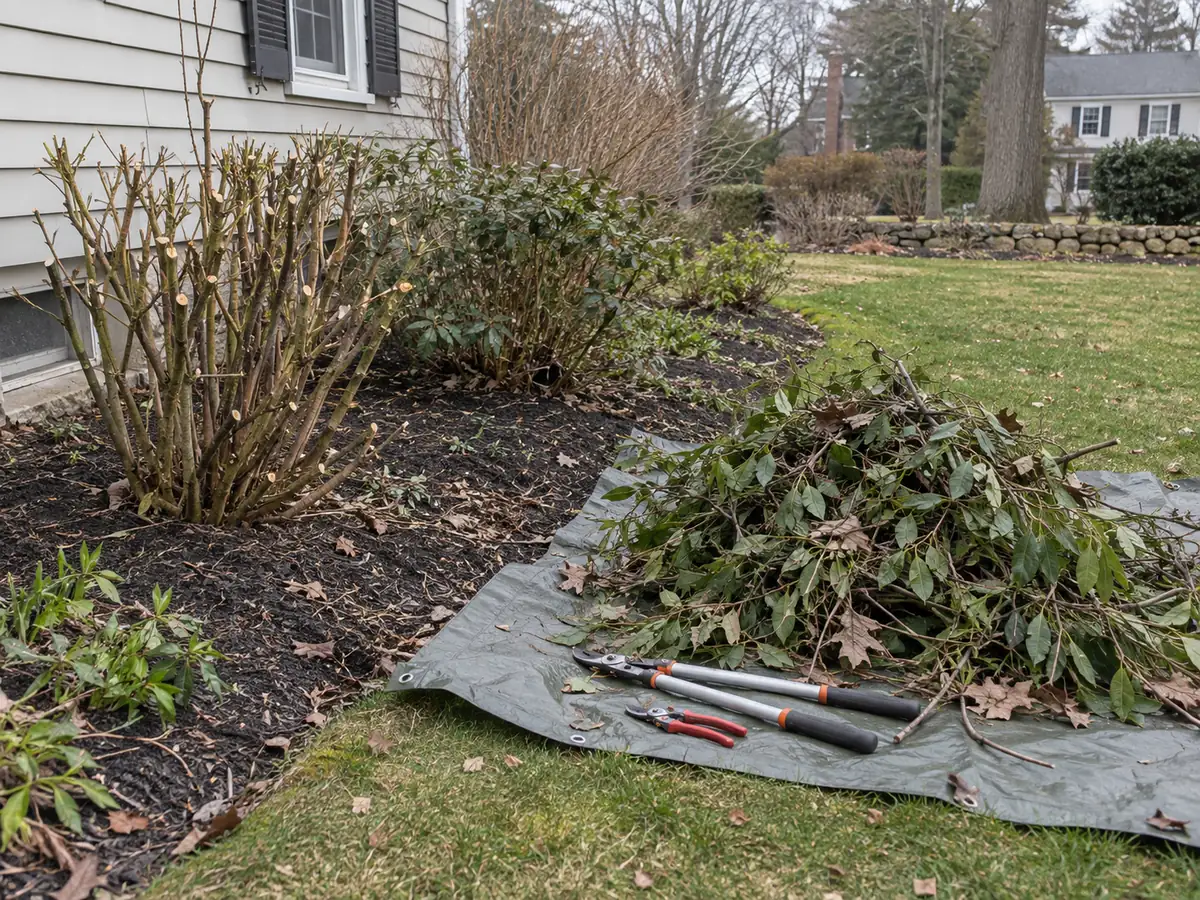
Step 4: Haul, dispose, and leave surfaces usable
Debris doesn’t belong in a new pile by the garage unless you asked for that. A cleanup finish means agreed material leaves the site or sits only where you’ve arranged township pickup.
Disposal details to confirm ahead of time:
- Is Worthy hauling green waste off-site?
- Are bagged leaves going to your municipal collection?
- Is any material staying as chip/mulch for you (only if you request it and it’s appropriate)?
- Are non-yard items included, limited, or excluded?
After the heavy material moves, we address the surfaces people walk and drive on. Twigs on the walk, dirt clods in the driveway, and scattered leaves from the haul path get a final pass. The goal is a yard you can use that evening without picking your way through leftovers.
Step 5: Finish standard—what “done” should look like
A completed property cleanup should leave the site maintainable. That usually means:
- Agreed debris removed
- Overgrowth cut back from structures, fences, and paths as scoped
- Beds cleared of the junk layer if that was included (bare soil or old mulch showing, ready for a future mulch visit if you want one)
- Hard surfaces blown or swept of cleanup debris
- No new hazard piles left in traffic areas
It does not automatically mean a showroom landscape. Fresh mulch, detailed pruning, new sod, and hardscape repairs are separate services unless they’re written into this visit. Cleanup is the reset; ongoing care is the rhythm that follows.
How cleanup connects to what comes next
Many homeowners book cleanup as the first chapter:
- Then lawn care — once debris is gone, mowing and edging can reach the edges properly. See our lawn care services.
- Then mulch — clean beds take mulch better than beds still full of leaves and bindweed.
- Then seasonal leaf service — if fall drop continues, a cleanup may clear the backlog so lighter leaf visits can keep up.
- Then shrub work — clearance cuts during cleanup are different from a shaping prune; we can schedule trimming as its own visit when form matters.
Thinking one step ahead keeps you from paying twice for the same corner of the yard.
Homeowner checklist before the crew arrives
- Confirm the map of included areas (photos with notes work well).
- List keep-piles vs. haul-piles.
- Share private gate-access details after scheduling, pet plans, and any HOA rules about street placement of bags.
- Move breakables and uncover anything the crew shouldn’t guess about.
- Ask how wet-weather delays are handled if clay soils are soft.
- Decide whether mulch, pruning, or mowing should be quoted as follow-on work now.
Request a cleanup scoped to your lot
Worthy Landscaping provides property cleanup for homes across Montgomery, Delaware, and Chester Counties and the Main Line / western Philadelphia suburbs. We’d rather define the finish before we start than debate it after the truck is loaded.
To schedule a walkthrough or send photos for an estimate, use contact us, email contactus@worthylandscaping.com, or call (215) 490-8474. Worthy Landscaping is based at 427 Jefferson Street, Bridgeport, PA 19405. Tell us what “done” means for your yard—we’ll write the scope to match.