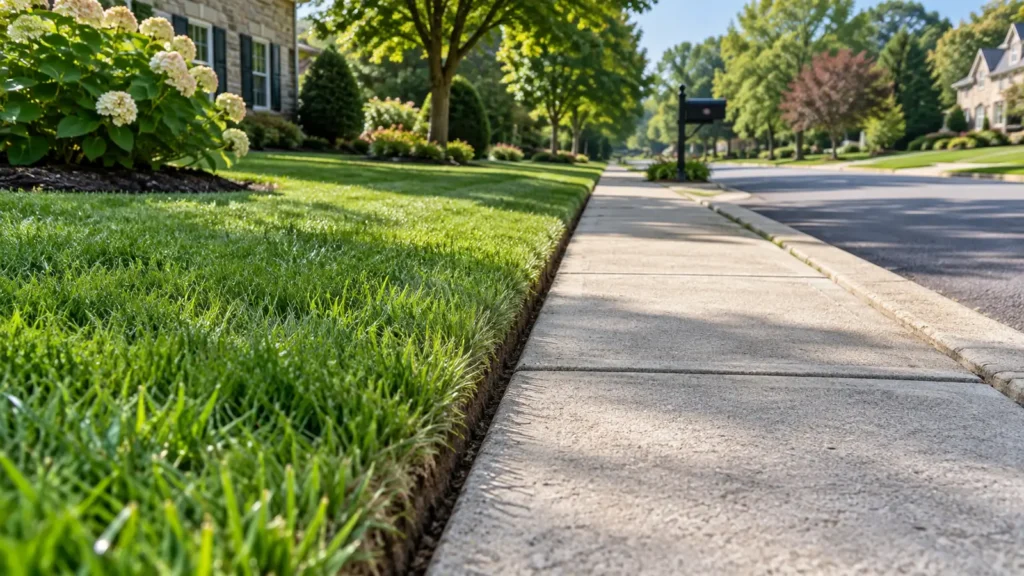
A lawn care quote that only says “weekly mowing” leaves a lot of room for disappointment. On compact Main Line and Montgomery County lots, the difference between a tidy finish and a rushed pass usually lives in the details nobody wrote down.
This guide covers what a clear lawn care scope should spell out—so you know what you’re paying for and what still falls on you.
Why scope clarity matters on local lots
Many properties here are not wide suburban spreads. You get narrow side yards, fence lines that catch clippings, shade that slows grass in one corner while sun cooks another, and planting beds that sit right against the walk. A “mow and go” visit can leave edges fuzzy, beds buried in clippings, or hardscape lines that look unfinished next to a neighbor’s sharper cut.
When the scope is vague, both sides guess. The crew may assume you only want the open turf. You may assume edging, blow-off, and a light bed tidy are included. Putting those items in writing prevents that gap.
Core turf work: height, frequency, and pattern
Start with the grass itself.
Mowing height. Cool-season lawns common in southeastern Pennsylvania generally look and recover better when they aren’t scalped. A written scope should name a target height range (for example, keeping the blade up enough that you’re not cutting more than about a third of the leaf at once). Exact numbers can shift with the season and grass type, but the principle should be on paper.
Visit rhythm. Weekly in peak growth, less often when growth slows—that’s the usual pattern. The scope should say whether visits are weekly by default, weather-dependent, or scheduled by you. Skipping after a wet week and then cutting tall, wet grass in one pass is hard on the turf and looks uneven.
Clippings. Mulching clippings back into the lawn is common when they’re short and dry enough. Bagging or removing them may be better after a long skip, heavy seed heads, or when you want a cleaner surface for guests. The scope should say which approach is standard and when the crew will switch.
Mowing pattern. Alternating directions week to week reduces ruts and helps the lawn stand more evenly. Asking whether the crew rotates patterns is a fair quality check.
Edging and string trimming: where yards look finished or unfinished
Open turf is only half the picture.
Hard edge lines. Walks, driveways, and curb lines either get a defined edge or they don’t. String trimming alone can soften a line; a blade or dedicated edger creates a cleaner break. Ask whether edging is every visit, every other visit, or only when you request it.
Obstacles and tight spots. Fence posts, AC units, lamp posts, tree trunks, and the strip between sidewalk and street need string trimming if the mower can’t reach them. On many Bridgeport-area and Main Line lots, those spots are half the job. If they aren’t listed, they often get skipped when the schedule is tight.
Beds, trees, and what “lawn care” usually does not include
Homeowners often mix lawn care with full landscaping. A clear scope draws the line.
Typically included with routine lawn care (when written in):
- Mowing the turf areas you designate
- Edging and trimming as agreed
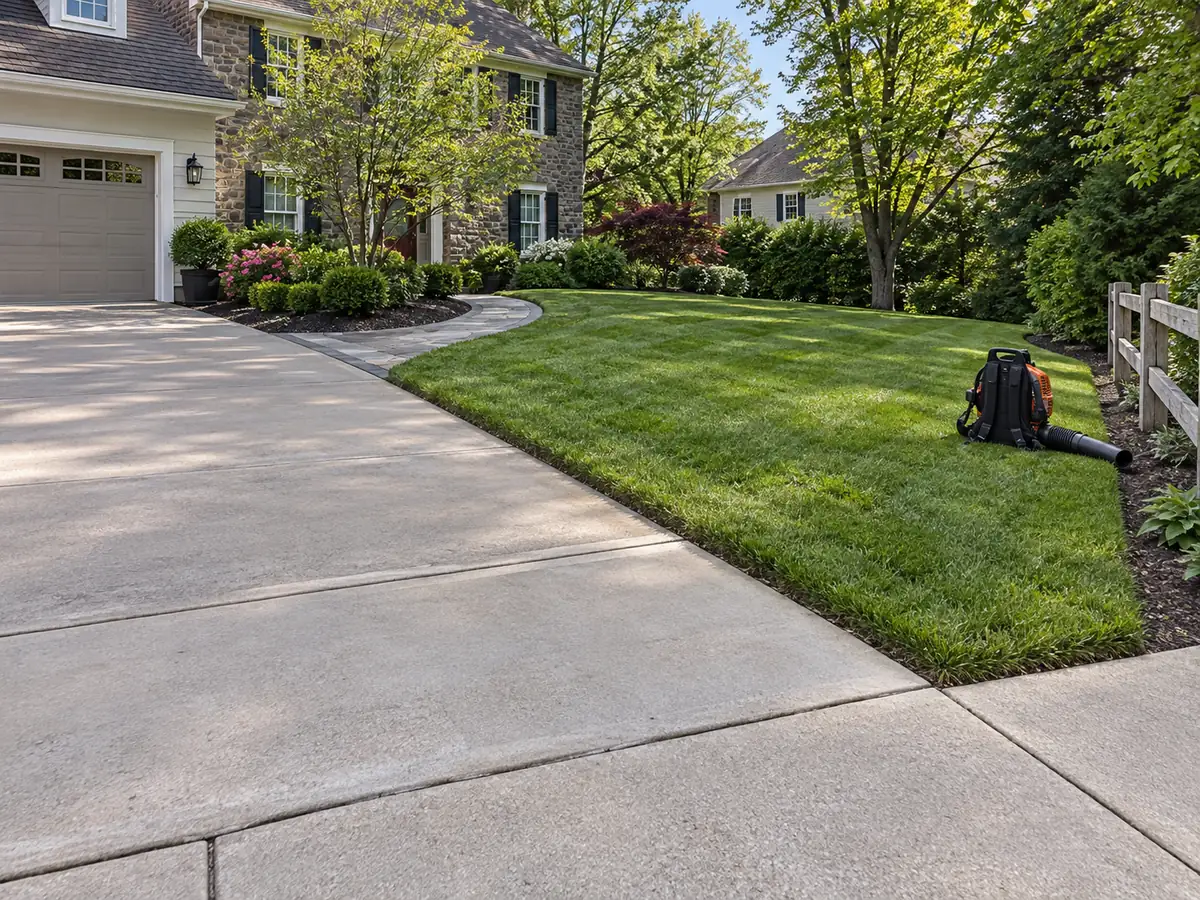
- Blowing clippings off hard surfaces after the cut
- Sometimes a light pass to keep bed edges from looking buried in grass
Often not included unless you add them:
- Deep weeding or cultivation of planting beds
- Mulch refresh
- Shrub pruning or hedge shaping
- Leaf removal in fall (that’s usually a seasonal or cleanup visit)
- Aeration, overseeding, or sod work
- Hardscape repairs
If you want beds kept neat between mulch cycles, say so. “Keep beds looking maintained” is too soft. Better: “Pull obvious weeds from front beds each visit” or “string-trim grass escaping into mulch edges.” Specific language beats hopeful assumptions.
Debris, blow-off, and how the property should look when they leave
A finished visit should leave hard surfaces usable. Clippings on the walk, driveway, and patio should be blown off. Grass against the house foundation or stuck in door thresholds should be cleared.
Ask where debris goes if something is bagged: hauled off, left in a designated can, or placed at the curb only when you’ve arranged it. Montgomery County and local borough rules vary; the crew should follow your instructions and current local rules.
What’s written vs. what’s assumed: a practical checklist
Before you sign or renew, confirm these points in writing:
- Turf areas included — front only, front and back, side yards, and any island beds with grass.
- Mowing height preference — and whether you’ll be asked before a major height change.
- Edging frequency — walks, drive, curb, patio.
- String trimming — fences, posts, beds, and the hellstrip if you have one.
- Clipping handling — mulch, bag, or situational.
- Blow-off — which surfaces, and whether beds get a light clean of grass clippings.
- Weather policy — rain delays, catch-up cuts, and how you’re notified.
- Extras — anything you think of as “obvious” (pet plans, toy pickup, and access arrangements; share sensitive codes privately after scheduling) that isn’t obvious to a visiting crew.
- Seasonal add-ons — leaf cleanup, aeration, mulch—priced or scoped separately so they don’t get silently skipped.
- Point of contact — who you text if something looks off after a visit.
If an item isn’t on the list, don’t assume it. Add it or schedule it as a separate service.
How Worthy approaches scope conversations
At Worthy Landscaping, we’d rather walk the property once and write a clear plan than argue about a fuzzy quote later. Our lawn care and landscaping services cover routine turf maintenance for homes across Montgomery, Delaware, and Chester Counties and the Main Line / western Philadelphia suburbs. When you want beds, leaves, or larger cleanups in the mix, we scope those as related work so nothing important rides on an unspoken assumption.
If you’re comparing providers—or tightening up an existing arrangement—bring this checklist to the conversation. A good crew won’t mind clarity.
Ready for an estimate built around your lot? Reach out through our contact page or call (215) 490-8474. Worthy Landscaping is based in Bridgeport, PA—happy to clarify scope before the first mow.